
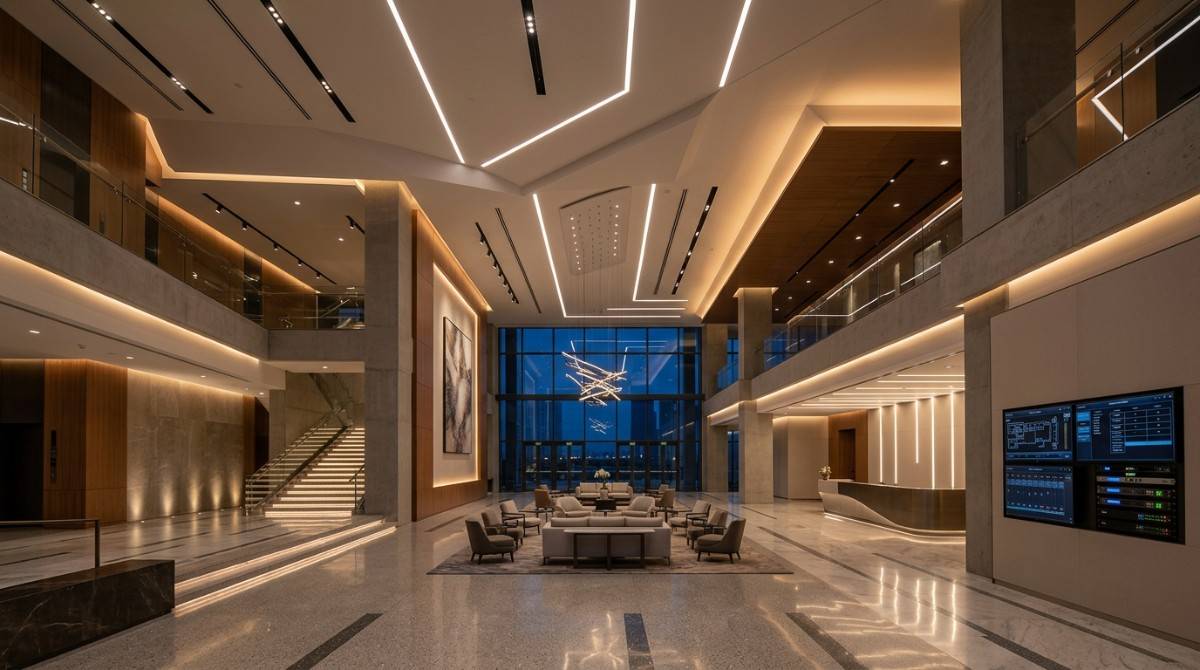
DMX Lighting Control Systems: Professional Design & Applications
Overview of Professional DMX Lighting Control Systems
Flipping a switch used to be enough. Not anymore.
Today's lighting environments, commercial buildings, entertainment venues, architectural facades, and large public spaces demand something far more sophisticated. Multiple fixtures running in sync. Zones that respond differently. Effects that change in real time. When a project reaches that level of complexity, keeping everything consistent without a proper control backbone becomes nearly impossible.
DMX solved that problem. It became the go-to standard in professional lighting because it gives every device on a network a way to communicate clearly, predictably, and at scale. Controllers, drivers, and fixtures stop acting like separate pieces of equipment and start behaving like one system.
SIRS-E builds DMX-compatible LED lighting systems right here in the United States. Electrical stability, clean control integration, and performance that holds up over years of real-world use, that's what drives how we engineer everything we make.
How Professional DMX Lighting Systems Work
Understanding DMX as a Lighting Communication System
DMX stands for Digital Multiplex. Strip away the technical name, and it's essentially a shared language, one that lets a central controller talk to every device on the network at once.
Brightness, color, timing, effects, whatever the fixture supports, DMX can handle it. Instead of chasing individual fixtures, an operator works from one place, and the whole system responds.
How DMX Coordinates Multiple Lighting Fixtures
The way DMX manages large numbers of fixtures comes down to addressing. Every driver or fixture gets a unique address. When the controller sends a signal, each device knows exactly what it's supposed to do, and what it isn't.
That simple structure makes a lot of things possible:
- Address-based communication
- Simultaneous fixture control
- Real-time lighting adjustments
- Scene-based lighting behavior
Why DMX Is Widely Used in Professional LED Installations
Professional environments put real pressure on control systems. DMX keeps showing up on job after job because it actually holds up under that pressure:
- Scalability for growing systems
- Reliable communication
- Industry-wide compatibility
- Real-time control capability
- Long-term flexibility
Core Components of a Professional DMX Lighting System
DMX Controllers and Lighting Consoles
The controller is where everything starts. It generates the commands that tell every fixture what to do and when.
On simpler jobs, that might just mean dimming. On larger installations, it means managing scenes, schedules, groupings, and effects across the whole network. A professional control setup typically handles:
- Scene creation
- Scheduling
- Fixture grouping
- Universe management
- Dynamic lighting effects
DMX-Compatible LED Drivers
LEDs don't just respond to control signals on their own; they need drivers to translate those signals into actual behavior. A DMX-compatible driver sits between the controller and the fixture, converting instructions into:
- Dimming adjustments
- Color changes
- Intensity control
- Dynamic effects
Fixtures, Luminaires, and LED Systems
Fixtures are what people see, but what they see is only as good as the infrastructure behind it. Our DMX-compatible lighting turns up across all kinds of environments:
- Architectural spaces
- Commercial interiors
- Hospitality settings
- Entertainment venues
- Dynamic installations
Signal Distribution Infrastructure
Big systems need more than good fixtures. Getting a clean signal from the controller to every device across a large installation takes real infrastructure:
- DMX cabling
- Signal splitters
- Repeaters
- Network nodes
- Structured signal routing
Professional DMX System Design Principles
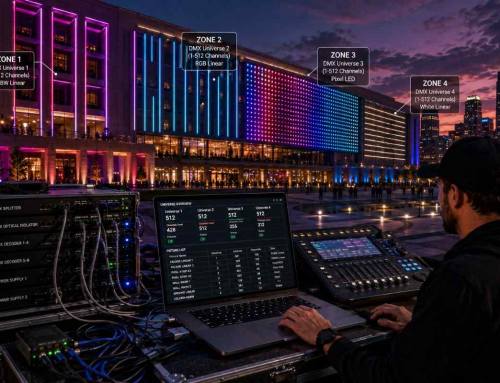
Designing Lighting Systems Around Zones and Scenes
Trying to control a large installation as one single group is a recipe for frustration. Professional systems break things into zones, each one serving a specific purpose:
- Ambient lighting zones
- Accent lighting zones
- Feature lighting areas
- Exterior façade systems
Structured DMX Network Architecture
A DMX network that grows without structure gets cluttered fast. Most professional installations are built in layers:
- Control Layer: controllers, processors, and interfaces where the decisions get made.
- Distribution Layer: the infrastructure that carries signals where they need to go.
- Fixture Layer: drivers and fixtures that actually execute the commands.
That layered structure keeps things reliable and makes expansion a lot less painful when the time comes.
Scalability and Expansion Planning
Lighting systems change. Facilities add spaces, clients want new zones, and control requirements grow. A system that wasn't designed with any of that in mind becomes a problem quickly.
Building in room for expansion from day one isn't extra work; it's just sensible planning.
Electrical Infrastructure in DMX Lighting Systems
Power Supply Design for Professional LED Systems
A lot of control problems aren't control problems at all. There are power problems that show up in fixture behavior. Good power planning accounts for:
- Continuous load requirements
- Voltage stability
- Proper system sizing
- Long-term operational demands
Signal Integrity and Reliable Communication
DMX communication is only as good as the infrastructure carrying it. Cheap cable, missing termination, poor shielding, any of those can introduce noise that throws off fixture behavior. The basics matter:
- Cable quality
- Proper termination
- Shielding
- Noise prevention
Managing Long-Distance Lighting Installations
Large projects often mean long cable runs. Signals degrade. Power drops. Without proper planning, the far end of the network performs differently from the near end. Addressing that usually means:
- Signal repeaters
- Distributed network nodes
- Power injection planning
- Structured signal routing
DMX Lighting Applications Across Professional Environments
Architectural and Facade Lighting Applications
Architectural projects tend to involve a mix of fixture types spread across large areas, sometimes indoors and outdoors simultaneously. SIRS-E DMX handles that kind of coordination well:
- Dynamic façade lighting
- Color-changing installations
- Coordinated interior and exterior systems
- Scheduled lighting behavior
Commercial and Retail Lighting Applications
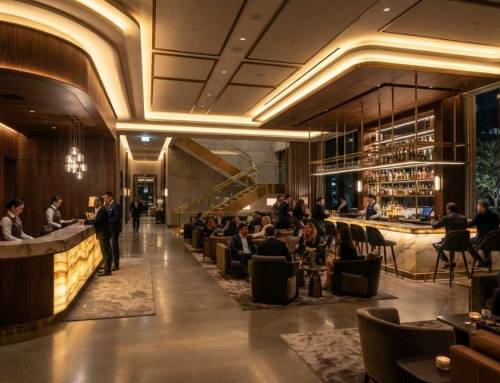
Commercial spaces need lighting that adapts throughout the day without someone manually adjusting it. Retail, hospitality, offices, public buildings, they all benefit from:
- Zone-based control across the facility
- Consistent appearance from space to space
- Scheduling that runs without intervention
Entertainment and Event Lighting Applications
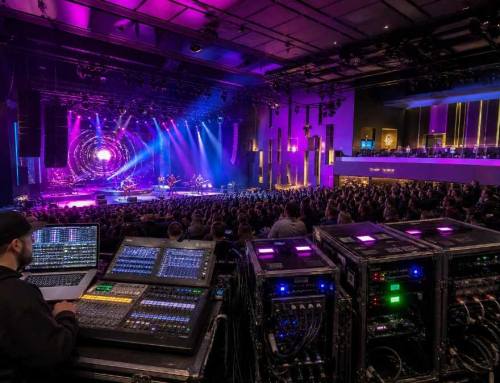
Entertainment is where DMX made its name, and for good reason. Live events don't forgive communication failures. These environments demand:
- Stage lighting control
- Dynamic scene programming
- Real-time adjustments
- Coordinated effects across multiple fixtures
Creative and Experiential Lighting Installations
Some projects don't fit neatly into any category. Museums, exhibitions, immersive environments, interactive installations, these push lighting systems into territory most standard setups weren't designed for:
- Museums and galleries
- Exhibitions
- Immersive environments
- Interactive installations
Installation, Commissioning, and System Maintenance
Professional Installation Planning
The work that happens before installation begins is what determines how smoothly the installation goes. That means working through:
- Fixture mapping
- Address planning
- Wiring documentation
- Control layouts
System Testing and Commissioning
Nothing should go live without being properly tested first. Commissioning typically works through:
- Signal testing
- Scene validation
- Flicker evaluation
- Full-system verification
Long-Term System Maintenance
A well-built system still needs ongoing attention. Over time, that means:
- Troubleshooting procedures
- Expansion planning
- Lifecycle management
- Documentation updates
Choosing the Right DMX Lighting Partner
Engineering and Technical Expertise
DMX projects need someone who understands the whole system, not just individual products. How power, control infrastructure, drivers, and fixtures interact, that system-level thinking is what separates projects that perform well from ones that keep causing problems. SIRS-E understands everything.
Product Reliability and Certification Standards
What goes into the installation determines how it holds up. Professional environments need:
- UL-certified systems
- Commercial-grade components
- Consistent operational performance
- Stable electrical behavior
Cutting corners on any of that tends to show up in ways that are expensive to fix.
Technical Documentation and Project Support
Good information before installation begins is worth far more than troubleshooting support after things go wrong. Useful project resources include:
- Wiring diagrams
- Technical datasheets
- Installation guidance
- Technical consultation
We go in well-informed and make better decisions at every stage.
Working with Qualified Lighting Contractors
System design only takes you so far. Installation quality matters just as much. Contractors with real DMX experience know how to handle addressing, wiring, commissioning, and troubleshooting in ways that generalist electricians often don't. That experience shows up in how the finished system actually performs.
Explore Professional DMX Lighting Solutions
SIRS-E's DMX earned its place as a professional standard because it works across scales, across applications, across years of continuous use.
Architectural installations, commercial environments, entertainment venues, one-of-a-kind creative builds, whatever the project, the fundamentals stay the same. Thoughtful planning, solid electrical infrastructure, and control systems that are properly integrated before anyone flips a switch.
FAQs
What is a DMX lighting control system?
It's a digital communication network that connects controllers, drivers, and fixtures so they operate together as a single coordinated system rather than independently.
Why is DMX used in professional LED lighting installations?
Because it delivers reliable communication, real-time control, and the kind of scalability that professional environments actually need, and it's compatible with products from virtually every major manufacturer.
What is the purpose of a DMX universe?
The universe is a group of control channels to manage/discover a set of dependent devices. If installations grow larger than what one universe can accommodate, then additional universes are added to support the increase in fixtures and control needs.
Can DMX systems scale for large commercial projects?
Absolutely. Some of the most massive installations of architecture, commercial, and entertainment in the world run DMX with that single characteristic: It scales with central control.
What is the difference between DMX and pixel-mapped lighting?
DMX is the communication protocol, the language the system speaks. Pixel mapping is a technique that uses the protocol to control individual LEDs or pixel groups independently, usually for detailed visual effects.








Leave A Comment
You must be logged in to post a comment.