Main 281-324-0908  |  9AM - 6PM M-F (CDT)

LED Strip Density Guide

Understanding LED Density and How It Affects Lighting Performance

LED strip lighting selection requires evaluation of LED strip density as an essential specification. The strip's installed LED quantity determines its brightness level, light distribution pattern, and electrical consumption and visual output when the lights are installed.

Architectural and commercial applications use LED strips to create integrated lighting systems that function from ceilings and walls to cover and display surfaces for daily use with consistent brightness throughout their operational life. Understanding LED density helps ensure the lighting system delivers consistent performance once installed.

At SIRS-E, we design and manufacture our LED strips in the United States to meet the electrical performance requirements of professional lighting systems, which need dependable operation throughout their entire lifespan.

banner image

Understanding LED Strip Density

What LED Density Means on an LED Strip

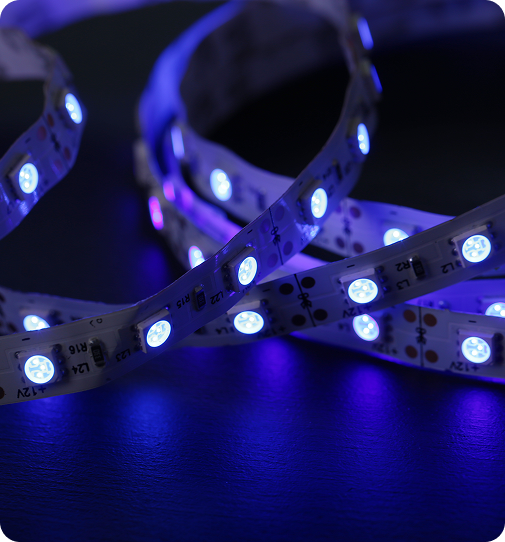
LED density defines the number of installed LEDs, which must be measured for each meter or foot of a strip. A strip with a rating of 60 LEDs per meter contains sixty individual LEDs, which are spaced evenly across each meter of the strip. 

The specification shows the distance between LED placements, which will affect the final appearance of the installed lights. Strips with higher LED density place the LEDs closer together, while lower density strips leave more space between each LED.

LED Count vs LED Density

LED strip products often reference both LED count and LED density.

LED count

The total number of LEDs on an entire strip reel is typically measured over a 5-meter length.

LED density

The number of LEDs installed per meter or per foot.

LED Density LED Spacing Appearance Through Diffuser Recommended Use
30 LEDs/m ~ 33 mm Visible dots Accent lighting
60 LEDs/m ~ 16 mm Slight dotting Cove lighting
120 LEDs/m ~ 8 mm Smooth light Task lighting
240 LEDs/m ~ 2 mm Continuous light Architectural linear fixtures

LED density is usually the more useful specification when comparing products because it describes how the light will be distributed across the installation.

Why LED Density Matters in Real Lighting Installations

LED density influences several aspects of lighting performance. The number of LEDs installed along a strip affects brightness, light distribution, electrical load, and thermal behavior. Understanding these factors helps ensure the strip you select performs as expected once installed.

Light Output and Brightness

The LEDs mounted on a strip are the components that produce light. When more LEDs are installed per meter, the total light output generally increases because more light sources are operating across the strip. However, brightness also depends on the electrical and performance characteristics of the LED system, including:

  • LED chip efficiency
  • drive current
  • power supply stability
  • thermal operating conditions
Light Distribution and Uniformity

Each LED on a strip functions as an individual light source. When LEDs are spaced farther apart, the lighting may appear as separate points rather than a continuous line of illumination. This effect, commonly called spotting, becomes more noticeable depending on installation conditions such as:

  • LED strips installed close to a diffuser or surface
  • strips that remain visible within architectural features
  • wider spacing between individual LEDs
  • shallow mounting depth between the strip & the illuminated surface
Power Consumption and Electrical Load

Higher-density LED strips contain more LEDs operating along the same length of material. Because each LED requires electrical current, increasing LED density generally increases the electrical demand of the strip and affects system planning considerations such as:

  • power supply sizing
  • wiring configuration
  • voltage distribution
  • Overall electrical load planning
Thermal Considerations

Heat management is an important factor in LED strip installations that operate for extended periods. Higher density strips may generate more heat because more LEDs are operating along the strip, and installations often incorporate aluminum LED channels or extrusions to help manage heat and protect the lighting system through:

  • improved heat dissipation
  • mechanical protection for the strip
  • more stable operating temperatures
  • support for long-term reliability

Common LED Strip Density Options

LED strips are typically manufactured in several standard density configurations. Each density supports different lighting applications depending on brightness requirements and visual expectations.

30 LEDs per Meter

Lower density strips where LEDs are spaced farther apart.

These strips are often used in decorative or accent lighting where visible light points are acceptable.

60 LEDs per Meter

A commonly used configuration that provides balanced brightness and moderate LED spacing.

This density is often used in residential and light commercial applications where improved uniformity is desired.

120 LEDs per Meter

High-density strips place LEDs closer together to produce a smoother and more uniform line of light.

240 LEDs per Meter and Higher

Very high-density strips designed to create a nearly continuous line of illumination. These are commonly used in architectural and commercial lighting where minimal spotting and uniform diffusion are important. Our AlphaSpec™ series, with 240 LEDs per meter, is designed for specification-grade installations requiring smooth, consistent lighting.

Choosing the Right LED Density for Your Project

The proper LED density should be selected based on both the intended purposes of the lights and the methods used for their installation.

Accent and Decorative Lighting

Decorative lighting needs to use lower-density strips because they need to show architectural features and visual effects without generating permanent light.

Task and Functional Lighting

Medium-density strips provide stronger illumination and improved light distribution for areas where lighting is needed for everyday tasks.

Architectural and Cove Lighting

Architectural spaces require higher-density strips, which create continuous lighting for coves and ceilings and recessed areas.

Retail and Display Lighting

Retail environments need uniform lighting because products and surfaces require complete illumination. Higher-density strips are often selected for these installations.

LED Density and Installation Design

Proper installation planning helps ensure LED strip lighting performs as expected once installed.

Distance Between LED Strip and Diffuser

The distance between the strip and the diffuser or surface affects how visible individual LEDs appear. When the strip is installed very close to the diffuser, higher LED density helps create smoother light distribution.

LED Channels and Diffusers

Aluminum LED channels help support LED strip installations by providing mechanical protection and thermal management. Channels with diffusers can also help blend light from individual LEDs, improving visual uniformity.

Long Runs and Power Distribution

Long LED strip runs require careful power planning to maintain consistent brightness across the installation. Power supplies and wiring should be selected based on strip density, total run length, and overall electrical load to reduce voltage drop and uneven lighting behavior.

LED Strip Systems from SIRS-E

Professional LED installations are typically built as systems rather than individual components.

LED Strip Lighting

SIRS-E LED strips are engineered for installations where lighting systems operate daily and require stable electrical performance.

Drivers and Power Supplies

Drivers and power supplies are selected based on system load and run length. Proper power design helps maintain a steady voltage across the lighting system.

Control and Integration

Some lighting systems incorporate dimming or DMX architecture to control brightness or color across multiple zones.

Built for Professional Installations

Professional LED installations are typically built as systems rather than individual components.

Designed and Manufactured in the USA

SIRS-E products are designed and manufactured in Texas, allowing direct control over product design, assembly, and quality standards.

UL-Certified Electrical Safety

Our LED lighting products are tested to meet UL safety standards and are used in installations where electrical compliance is required.

Stable Performance for Long Run Times

Lighting systems installed in commercial environments often operate for extended periods each day. Our products are engineered to maintain consistent performance under continuous use.

Technical Support That Supports the Project

We design and manufacture our products in Texas, giving us direct control over design, testing, and quality standards.

Wiring Diagrams and Documentation

SIRS-E provides product documentation and wiring diagrams to support installers and system integrators.

System Planning Guidance

Our team can assist with product selection, power planning, and system configuration questions.

Ongoing Technical Assistance

Technical support is available in English and Spanish, along with access to documentation and instructional resources.

Planning an LED Strip Lighting Installation

Proper planning helps ensure LED strip lighting performs reliably once installed.

Power Planning

Run lengths, load requirements, and power supply sizing should be evaluated early in the design process.

Mounting and Thermal Considerations

Mounting surfaces and airflow conditions affect heat management and long-term LED performance.

Control System Planning

If lighting will be dimmed or controlled through DMX architecture, channel mapping and system layout should be defined during project planning.

Start Your LED Strip Lighting Project

If you are planning an LED strip installation for architectural, commercial, or integrated lighting environments, the SIRS-E team can assist with product selection and system considerations.

Frequently Asked Questions

What does LED density mean on an LED strip?
faq arrow

LED density refers to the number of LEDs installed per meter or per foot of strip. It describes how closely the LEDs are spaced and helps determine brightness and light distribution.

Does higher LED density always mean brighter lighting?
faq arrow
Why do some LED strips show visible dots of light?
faq arrow
How does LED density affect power supply selection?
faq arrow
Which LED density is best for architectural lighting?
faq arrow
Go to Top