
Why Choose LED Strip Lights for Hospitality Spaces
By : Diego Iorio | Published On : September 01, 2026
Summary: LED lighting has quietly become one of the backbones of modern hospitality design. It gives hotels, restaurants, resorts, and entertainment venues the flexibility to shape mood and atmosphere while keeping energy costs in check. A properly designed architectural LED system delivers reliable performance and consistent light quality across a property, letting designers focus on creating spaces guests actually want to spend time in, all while keeping operations running smoothly for years down the line.
Lighting has a central place in each hospitality environment and affects the guest experience all the way from the check-in process. Hotels, resorts, and entertainment lounges & restaurants depend upon highly efficient lighting as it makes the built environment attractive while serving various functions.
The current hospitality projects need lights that balance beauty and practicality, durability and longevity. LEDs are a choice that won out largely because they offer design ability while being able to be integrated into architectural and bespoke interior features. Additionally, professional-grade LED lighting systems allow architects and designers to ensure consistent performance throughout the property.
From guest rooms to public spaces, touch base with how you can use LED lighting for success in your hospitality projects.
Why Lighting Is Essential in Hospitality Design
Hospitality lighting is far more than just the lights that need to light a space. It shapes the way guests experience a property, underlies day-to-day operations, and contributes to the overall ambiance that defines the brand.
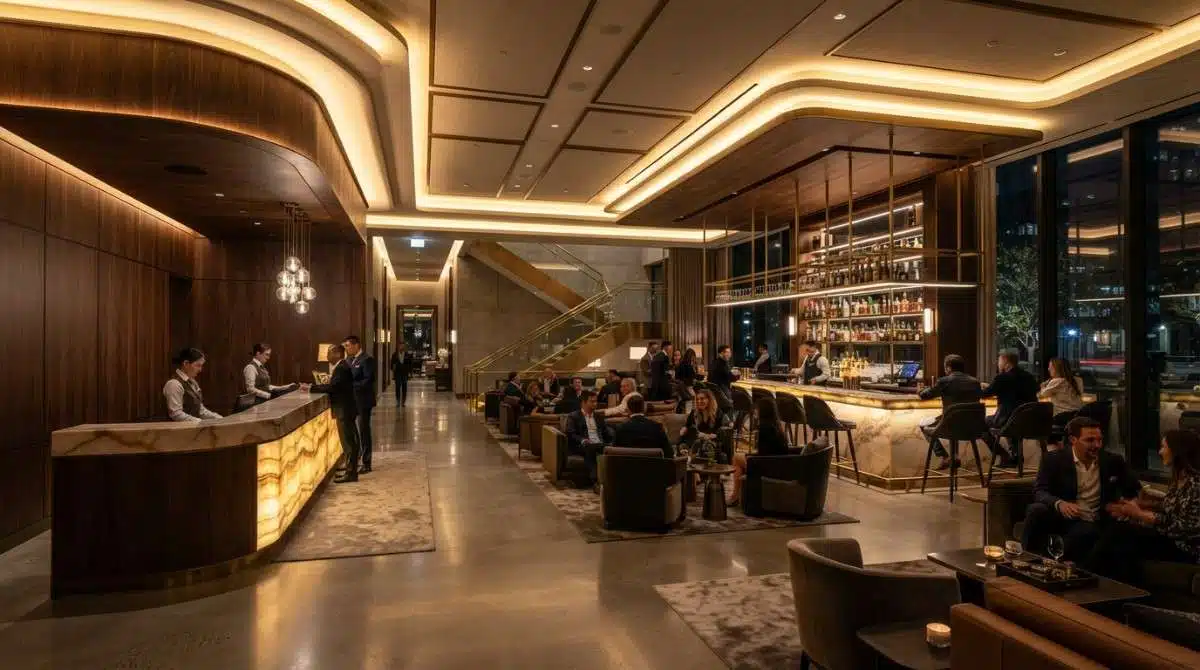
We all know first impressions start in the lobby or entrance, so lighting sets the mood for the whole guest experience. When they arrive, warm, welcoming lighting helps guests feel welcome; accent lighting helps draw attention to architectural elements and finishes inside.
The specific hotel lighting locations and their installation: every location of a hospitality property is distinct in function, therefore requiring some method to design for each. Guest rooms demand comfort and relaxation, restaurants need to balance between ambiance and functionality, whilst corridors require an organizer of light for navigation & safety.
Perfectly designed lighting properly defines a property design identity. Lighting can become an inherent part of the overall interior design and create atmosphere simply by complementing materials, textures & architectural details rather than working under the impression that it is a functional necessity.
Hospitality facilities are operated for prolonged hours on all days, so the lighting systems need to be durable and reliable in the long term. Reliable operation minimizes interruptions with maintenance while providing a consistent guest experience across your property.
Key Areas Where LED Lighting Enhances Hospitality Spaces
You can also use LED lighting throughout virtually any element of a hospitality project for functional lighting and to augment architecture.
Hotel Lobbies and Reception Areas
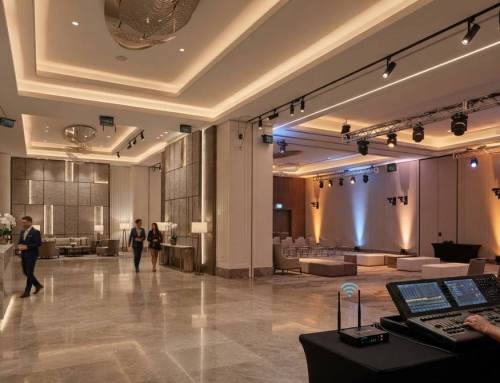
The lobby is where guests form their first impression, so the lighting needs to feel warm and match the personality of the building.
LED lighting can help:
- Make reception areas feel welcoming
- Highlight architectural details
- Add depth to ceilings and feature walls
- Bring out decorative elements
- Balance the space visually
Ceiling coves, reception desks, and other millwork often use linear lighting and LED strips to get that clean, seamless look modern hotels tend to go for.
Guest Rooms and Suites
A guest room needs different kinds of light for different parts of the day; reading in the morning is not the same as winding down at night.
LED strips work well for:
- Cove lighting
- Headboard lighting
- Closet lighting
- Under-cabinet lighting
- Mood lighting
Beyond just comfort, this kind of lighting sharpens the room’s overall look. And since the fixtures are tucked into millwork or furniture, nothing sticks out or clutters the space.
Restaurants, Bars, and Lounges
In dining and entertainment spaces, lighting basically sets the emotional temperature of the room.
LED lighting can:
- Accent dining areas
- Highlight interior finishes
- Enhance bar displays
- Define seating areas
- Keep things feeling welcoming
Used well, lighting becomes part of the flavor of the place guests feel it even if they can’t say why.
Corridors and Common Areas
Hallways, elevators, and other common spaces need lighting that works just as hard functionally as it does aesthetically.
LED lighting helps:
- Guide people through the space
- Keep illumination consistent
- Support guest safety
- Bring out architectural details
- Tie the whole property together
That consistency matters; it’s what makes a property feel like one cohesive experience from the moment someone arrives to the moment they leave.
Outdoor Hospitality Spaces
Outdoor areas have become a bigger part of hospitality design than they used to be.
LED lighting can elevate:
- Patios
- Pool areas
- Walkways
- Landscape features
- Outdoor seating areas
Done thoughtfully, it stretches these spaces well past sunset, while still showing off the architecture and natural surroundings after dark.
Why LED Strip Lighting Is a Popular Choice for Hospitality Projects
Of all the diverse lighting types, LED strip light is one of those flexible solutions widely used in hotel applications.
The low-profile popularity of the fixture with a very slim construction enables designers to integrate lighting in their architectural details without any visible fixtures. It ensures clean lines on the inside while allowing for subtle lighting.
Key advantages include:
- Low-profile installation
- Flexible design possibilities
- Will not disturb your millwork and architectural features
- Uniform illumination
- Suitable for custom interiors
- Energy-efficient operation
- Supports contemporary hospitality design trends
LED strip lighting is used inside ceilings, shelving, reception desks, displays & display areas, and for furniture such as bars or stairways, even feature walls. Due to its flexibility, designers can achieve a custom lighting layout that is specific for each space while keeping a cohesive appearance throughout the property.
Being able to maintain a consistent light level also helps you avoid harsh transitions, so your lights can be smooth instead of choppy, enhancing the architectural finishes in your hotel/restaurant and patron comfort.
Building a Complete Hospitality Lighting System
A good lighting project for hospitality is not only about the right choice of fixtures. A complete lighting system is made up of interrelated components designed to work reliably as a single entity.
A comprehensive system may include:
- LED strip lights
- Linear LED fixtures
- LED drivers
- Controllers
- Power supplies
- Dimming systems
Each of these elements contributes to the performance of the entire system. The lights are provided by LED strips. The drivers control the electric power supply, and the controllers manage it. Information about lighting features and dimming systems allows flexible conditioning according to the specific needs of each area.
Compatible system components ease the installation of a facility and minimize commissioning problems. This allows for performance that’s much more predictable, and combines to create easy management of consistent illumination across the property.
For larger hospitality developments, standardized light systems support future renovations or phased construction as necessary, and general maintenance over time while tracking to overall design consistency throughout the facility.
Why SIRS-E® Supports Hospitality Lighting Projects
Hospitality spaces need lighting solutions that integrate seamlessly while also providing reliable longevity performance. SIRS-E® produces specification-grade LED lighting fixtures for commercial settings.
It offers LED strip lights, linear lighting products, drivers, power supplies, controllers, and matching system components designed to integrate into fully functioning lighting solutions. Proudly designed and manufactured in the USA, SIRS-E® supports architects, lighting designers, electrical engineers, and contractors through high-quality, reliable lighting systems with engineering expertise and support.
Specialized and engineered approaches to manage illumination, whether for hotel guest rooms, reception areas, restaurants, entertainment venues, or tailored hospitality interiors, provide a repeatable process that allows for reliable quality across every phase of the project.
Conclusion
Good hospitality lighting combines architectural attractiveness with reliable long-term utility.
This capability ensures architects and designers can provide effective, welcoming hospitality environments with seamless systems that include direct-view LED strip lighting, surface light sources for consistent illumination, simplified maintenance, and long-term value across the property when robust components are selected together.
SIRS-E® provides Professional architectural lighting solutions for commercial hospitality projects, including LED strip lights and linear lighting, drivers, controllers, and power supplies. Get in touch with us today and share your hospitality lighting project so we can provide you with some qualified advice on whether the LED lighting system would fit best for your property!
Frequently Asked Questions
Why is LED lighting important for hospitality spaces?
Because lighting is honestly half the vibe. Walk into a hotel lobby with bad lighting, and it doesn’t matter how nice the furniture is. LEDs let you get that warm, welcoming feel without the electric bill or bulb changes piling up.
Where can LED strip lighting be used in hotels and restaurants?
Cove ceilings, behind the reception desk, headboards, closets, under cabinets, bars, shelves, hallways, stairs, even patios outside. Basically wherever you want light but not an actual visible bulb.
What features should architects look for in hospitality LED lighting systems?
Real CRI numbers, not just marketing ones. Color that matches across every fixture. A lifespan that’s actually backed up somewhere. Smooth dimming not the kind that flickers or steps. And documentation that isn’t a nightmare to dig through.
How does LED lighting improve guest experience and interior design?
It draws your eye to the nice stonework or the wood paneling, helps you find your way around without staring at signs, and just makes a place feel put-together. Most guests won’t clock why a room feels good; they just feel it.
Why choose professional LED lighting systems for hospitality projects?
Because cheap shortcuts always show up eventually: colors that don’t match, parts that die early, dimmers that fight each other. Going with a proper system means someone tested this stuff together, there’s support if it breaks, and it’s built for actual commercial wear, not a spare bedroom.








Leave A Comment
You must be logged in to post a comment.