
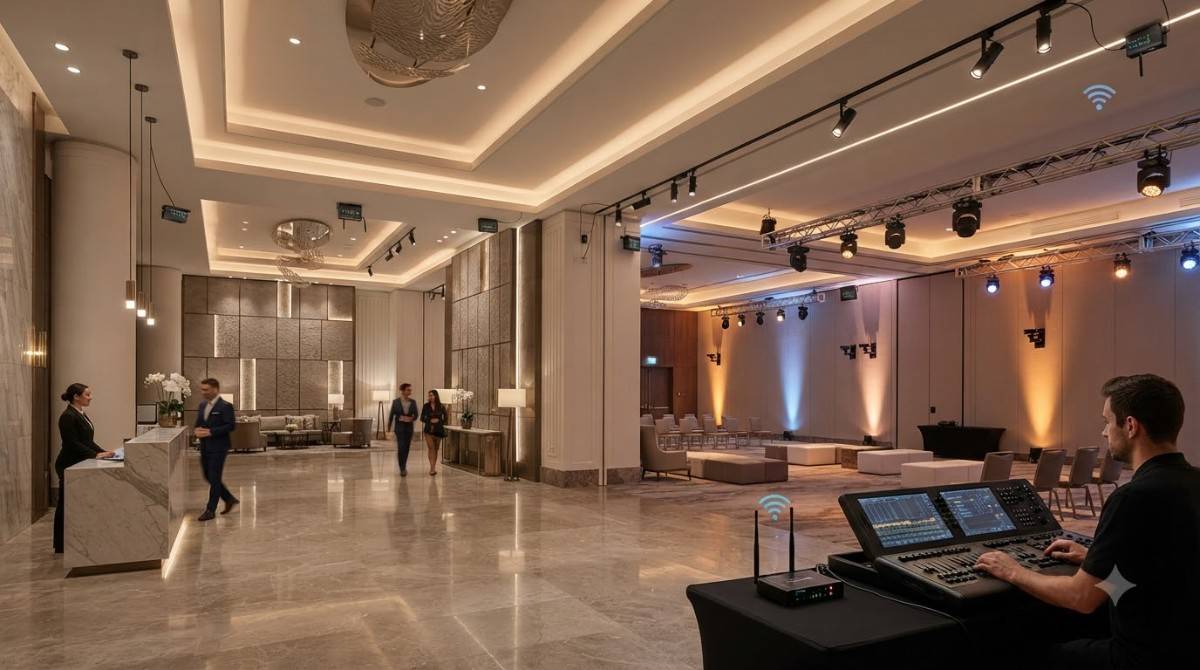
Wireless DMX for Hotels, Stages, and Architectural Projects
Modern lighting projects need more than just great illumination; they need control systems flexible enough to keep up with changing spaces and creative demands. Wired DMX is still a trusted choice for plenty of installations, but wireless DMX has become a real contender for projects where cutting down on data cabling and simplifying installation actually matters.
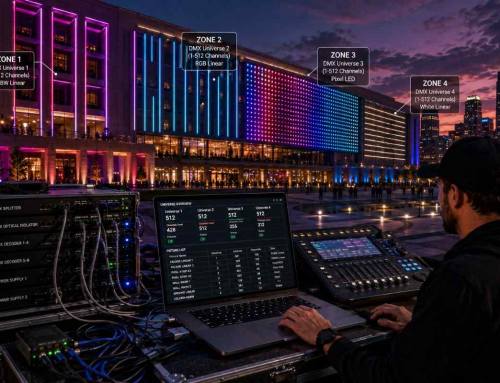
Wireless DMX lets a lighting controller talk to compatible fixtures without relying on a web of DMX signal wiring running through the building. That makes it a genuinely good fit for hotels, entertainment venues, theaters, and architectural work where fast deployment and flexible control are priorities. Done right, wireless DMX delivers the same synchronized performance as a wired system while cutting out a lot of the installation headache.
As an American manufacturer of professional LED lighting, SIRS-E supports this kind of advanced control with DMX-compatible LED strips and integrated solutions built for demanding commercial environments.
What Is Wireless DMX?
Wireless DMX is a control technology that sends DMX data through the air instead of through cables. A wireless transmitter broadcasts DMX commands out to one or more receivers, which are connected to compatible fixtures or DMX decoders.
The controller still runs the whole show, sending out brightness changes, color shifts, scene recalls, whatever the lighting needs to do. The transmitter just relays those commands wirelessly, letting fixtures across the whole installation respond at the same time.
It's compatible with most professional DMX systems too, so it works just fine with architectural lighting, entertainment venues, hospitality spaces, and commercial installs running DMX LED strips, RGB, RGBW, or digital LED products.
One thing worth being clear on: wireless DMX only replaces the data path, not the power supply. Every fixture still needs a properly sized LED driver or power supply to run safely and consistently. Keeping wireless control separate from power distribution is exactly what keeps the system dependable while still giving you a lot more flexibility on install.
Why Wireless DMX Is Becoming More Popular
Lighting designers keep reaching for wireless DMX because it simplifies a lot of the install process without giving up any real control.
Some of the biggest reasons it's catching on:
- Cuts down significantly on control cabling needed for a project
- Speeds up installation, especially in existing buildings where new wiring is a pain to route
- Makes repositioning fixtures or adding zones later much easier
- Keeps the visual footprint clean, which matters a lot in historic buildings, luxury hotels, museums, and landmark structures
- Works great for temporary setups like concerts, trade shows, and events that get built and torn down repeatedly
That last point matters more than people think. Faster deployment means less setup time, and it gives designers room to build adaptable layouts for productions that change from one event to the next.
Wireless DMX Applications Across Different Industries
Hotels and Hospitality Spaces
Hotels lean heavily on lighting to shape the guest experience. Wireless DMX lets lighting professionals build flexible control into lobbies, reception areas, restaurants, ballrooms, rooftop lounges, and outdoor event spaces, without tearing into the building's existing infrastructure.
- Decorative architectural lighting
- Cove lighting
- Accent lighting
- Feature walls
All of these benefit from wireless control, especially during renovations where wireless can cut down on new cabling and keep disruption to hotel operations to a minimum, while still giving designers freedom on fixture placement.
Entertainment and Stage Productions
Venues need lighting that can shift fast between performances. Wireless DMX supports concert venues, theaters, touring shows, temporary stages, broadcast studios, and event spaces, anywhere flexible layouts matter.
Fixtures can move between productions while staying in sync, whether it's dramatic stage scenes, audience lighting, or dynamic color effects. That flexibility during setup and programming is a real advantage for touring productions especially.
Architectural Lighting Projects
Architectural work often comes with its own set of installation headaches. Building façades, museums, public landmarks, bridges, commercial buildings, exterior feature lighting- all of these frequently call for control systems that stay out of sight.
Wireless DMX works well here, particularly for historic buildings where preserving the structure matters just as much as the lighting itself. It cuts down on invasive modifications while still delivering professional-quality control.
Components of a Wireless DMX System
A reliable wireless DMX setup comes down to a handful of components working together properly.
- Wireless DMX Controller – the command center, where scenes, brightness, color, and zone management all originate
- Wireless Transmitter – takes the DMX data from the controller and broadcasts it out to compatible receivers.
- Wireless Receiver – picks up that signal and passes it along to the LED fixtures or decoders, keeping everything synced.
- DMX LED Strips and Fixtures – static white, RGB, RGBW, architectural fixtures, or digital strips for more dynamic effects
- LED Drivers and Power Supplies – stable power is still essential even though the data's wireless, so properly matched drivers keep voltage consistent and fixtures running reliably
When these pieces are chosen carefully and actually designed to work together, you end up with a professional control system that handles both permanent and temporary installs without a hitch.
When Wireless DMX Is the Right Choice
| Project Type | Why Wireless DMX Works Well |
| Hotel renovations | Less new cabling to install |
| Temporary event venues | Goes up and comes down fast |
| Concert stages | Fixtures can move around freely |
| Historic buildings | Barely touches the existing structure |
| Museums | Keeps up with exhibits that change often |
| Architectural lighting | Easier control across several zones |
| Broadcast studios | Configurations can shift as needed |
| Outdoor events | Way less cable to manage on site |
Design Considerations for Reliable Wireless DMX Performance
Wireless DMX still needs real planning behind it. Swapping cables for radio signals doesn't mean skipping the groundwork. Here's what actually matters:
- Look at the project layout early on and figure out whether wireless genuinely fits the space and what you're trying to achieve
- Try to keep a clear line of sight between transmitters and receivers wherever you can, since that keeps the signal reliable
- Stick with professional-grade wireless gear rather than cutting corners; it pays off in performance over time
- Group fixtures into logical zones so programming and future maintenance don't turn into a mess
- Double-check that controllers, receivers, decoders, strips, and fixtures are all actually compatible before you're deep into installation, not after
- Remember that power still needs its own plan separate from the wireless data; every fixture needs a driver and power supply sized correctly
- Run the whole system through a full test before handing it over, and write down device assignments, receiver locations, and controller setups so whoever maintains it later isn't starting from scratch
Wireless DMX vs. Wired DMX: Choosing the Right Approach
| Feature | Wireless DMX | Wired DMX |
| Data Communication | Wireless | Physical cable |
| Installation | Usually quicker | Needs dedicated cabling |
| Flexibility | Easy to change later | Locked into the cable layout |
| Renovation Projects | Often the better fit | Sometimes needs extra work |
| Temporary Installations | Great fit | Takes longer to set up |
| Permanent Large Installations | Can work alongside wired | Still the standard for long-term builds |
Neither one is the automatic winner here. Wired DMX still holds up as the standard for a lot of permanent installations, and wireless earns its place when cabling is a limitation, the install is temporary, or renovation constraints make running new wire impractical. Really, it comes down to the size of the project, what the space allows, and what kind of performance you need from it long term.
How SIRS-E Supports Professional DMX Lighting Projects
Professional lighting works best when every piece is designed to fit together. SIRS-E manufactures American-made LED lighting that supports a wide range of DMX applications: hospitality, entertainment, commercial, architectural, all of it.
The lineup includes professional DMX LED strips, digital LED solutions, controllers, decoders, power accessories, and custom manufacturing for OEM and specialty projects. With real technical expertise and consistent product quality behind it, SIRS-E helps designers, contractors, and integrators build lighting systems that actually hold up across different project environments.
Conclusion
Wireless DMX gives lighting professionals a genuinely flexible way to design and install LED systems for hotels, stages, entertainment venues, and architectural projects. Cutting down on control cabling while still keeping everything synchronized means simpler installs and more adaptable designs across a lot of different applications. Paired with compatible controllers, quality LED products, reliable power distribution, and careful planning, wireless DMX becomes a genuinely dependable option for modern lighting work. Understanding what a project actually needs, both now and down the road, is what lets designers figure out when wireless is the right call.
Whether it's a luxury hotel, an entertainment venue, or a large architectural installation, SIRS-E offers professional-grade American-made LED strip lighting, DMX-compatible products, controllers, and custom lighting solutions built for dependable performance. Reach out to the SIRS-E team to find the right LED lighting and DMX control solution for what you're building next.
Frequently Asked Question's
What is wireless DMX?
It's a way of controlling lighting that sends DMX signals through the air instead of through cable, so the controller and the fixtures can talk to each other wirelessly.
Does wireless DMX eliminate the need for power cables?
Not at all. It only makes the data connection wireless; every fixture still needs its own power supply and LED driver to actually run.
Where is wireless DMX commonly used?
You'll see it a lot in hotels, theaters, concert venues, museums, architectural projects, and anywhere lighting needs to go up and come down quickly for a temporary event.
Is wireless DMX compatible with LED strip lighting?
Yes, it works fine with DMX LED strips, RGB, RGBW, and digital LED systems, as long as everything's compatible to begin with.
How do I choose between wired and wireless DMX?
It really depends on the project. Think about the layout, how the install needs to go, how much flexibility you need down the road, and what you actually want out of the lighting long term.








Leave A Comment
You must be logged in to post a comment.