
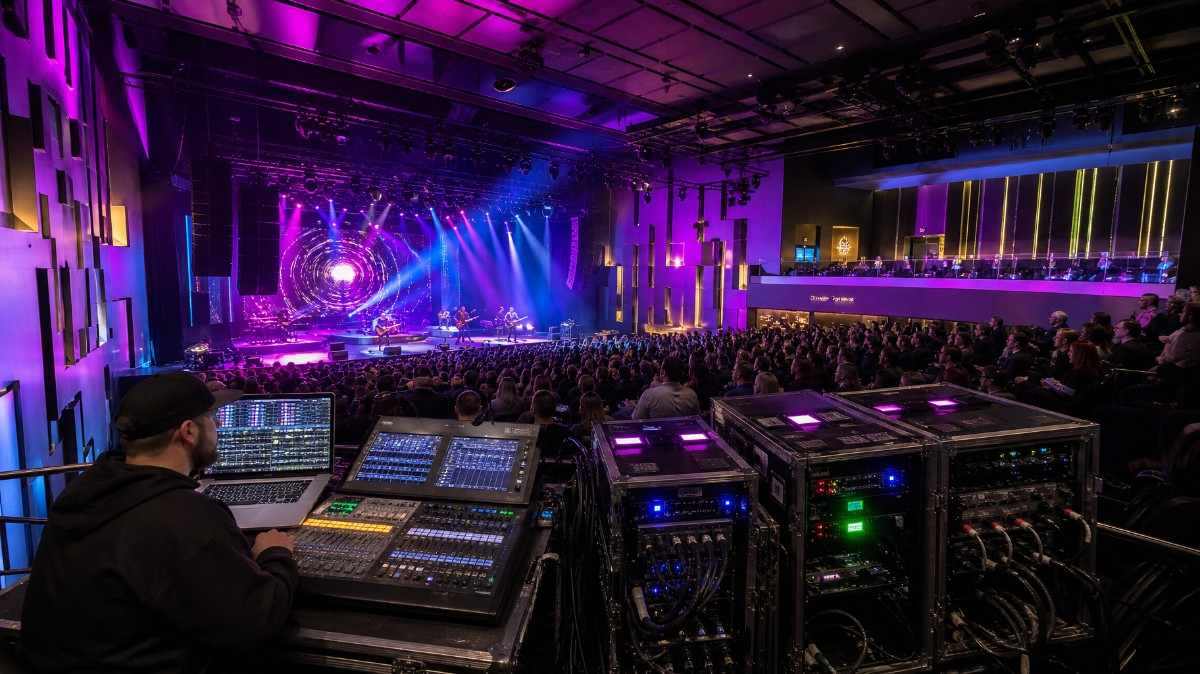
Designing DMX Systems for Entertainment Venues
Lighting does more than illuminate a stage. It shapes how an audience feels, builds the atmosphere, and often tells half the story before a performer even opens their mouth. Whether it's punctuating a theatrical moment, syncing with a live band, or building out a fully immersive themed space, professional lighting does serious work behind the scenes. As venues push for more advanced setups, having a system that's precise, flexible, and dependable matters more than ever.
DMX, Digital Multiplex, is the protocol the industry has built around for controlling professional lighting. It lets you manage a whole fleet of fixtures from one place, keeping everything synchronized and talking to each other reliably. Theaters, concert venues, nightclubs, theme parks, museums, broadcast studios: a well-thought-out DMX system is what keeps the lighting dynamic without sacrificing consistency. SIRS-E builds American-made DMX LED strips, controllers, decoders, and everything else needed to support commercial, architectural, and entertainment work at this level.
What Is a DMX Lighting System?
DMX is the go-to communication protocol for controlling professional lighting. It lets a single controller talk to a whole network of fixtures at once, giving precise control over brightness, color, movement, timing, and more.
Instead of running each fixture on its own, a DMX system sends digital commands across the network so dozens (or hundreds) of lighting devices can move together in synchronized scenes. That centralized setup simplifies operation while giving designers a huge amount of creative room to work with.
DMX plays well with a wide range of professional lighting products, including:
- LED strip lighting
- Digital LED strips
- Architectural linear lighting
- RGB and RGBW fixtures
- Specialty entertainment lighting
- Accent and feature lighting
That reliability and broad compatibility is why DMX has become the standard for entertainment venues and architectural projects alike, whether you're running a handful of fixtures or coordinating hundreds across a massive venue.
Why Entertainment Venues Depend on DMX Lighting Control
Venues need lighting that can respond fast and stay perfectly synced across every fixture in the room. DMX gives lighting professionals exactly that kind of responsiveness, which matters a lot when the lighting is constantly supporting live performances and shifting audience experiences.
With DMX, designers can build and recall complex scenes, sync effects across multiple zones, and adjust everything on the fly during a live show. That flexibility is essential for venues hosting all kinds of different events throughout the year.
Some of the real advantages:
- Precise control over lighting scenes
- Effects that stay synced across fixtures
- Fast response during live shows
- Flexible programming from one production to the next
- Systems that scale for venues of any size
- Reliable operation over long stretches of use
- Simplified management even for complex installations
You'll find DMX systems running the show in concert halls, theaters, nightclubs, live event venues, theme parks, museums, television studios, and performance spaces. That versatility is what lets designers reshape a venue for a new production without rebuilding the lighting system from scratch each time.
Core Components of a Professional DMX System
Here's the thing about DMX installations: they're only as good as how well the pieces work together. Get the components right from the start, and you save yourself a lot of grief later, both in getting it installed and in keeping it running for years.
DMX Controllers
Think of the controller as the brain of the whole setup. Every instruction the fixtures follow, scenes, transitions, color shifts, brightness, effects- all of it originates here.
A good professional controller can juggle several lighting zones at the same time, hang onto programmed scenes so you can pull them up again later, kick off automated sequences on its own, keep effects synced across the board, and switch gears quickly when a new production comes through.
DMX LED Strips and Fixtures
These are the ones actually doing what the controller tells them. You've got static white strips, RGB, RGBW, digital strips, architectural linear fixtures, and specialty entertainment lighting to pick from. That range is really what gives designers room to work, whether they're going for something decorative, architectural, or built for a live performance.
DMX Decoders
The decoder's job is translation. It takes the digital signal coming from the controller and turns it into something the LED fixtures can actually act on. Without it, communication between the two would just fall apart, so it's what keeps everything talking to each other properly.
LED Drivers and Power Supplies
None of this matters if the power isn't stable. Drivers and power supplies need to be matched to whatever fixture they're feeding, keeping voltage and current where they should be. Get this wrong, and you're either stressing the equipment or risking flaky performance down the line.
Cables and Signal Distribution
This part's easy to overlook, but it matters just as much as anything else. Proper DMX cabling, clean signal integrity, cable runs that are actually organized instead of a tangled mess, less interference, all of it adds up to a system that keeps working reliably for the long haul.
Planning a DMX Lighting System for Entertainment Venues
Before anyone touches a single fixture, good DMX design starts with just sitting down and figuring out what the venue is actually trying to accomplish.
Identify Project Goals
Start by asking what the lighting is really there to do. Maybe it's supporting stage performances, maybe it's about accenting the architecture, maybe it needs to move with the audience or create something interactive and immersive. Whatever the answer is, it shapes every decision that comes after it.
Divide the Venue into Lighting Zones
Breaking a venue up into zones just makes life easier once you're programming and running the system day to day. Usually that means the main stage, audience seating, the lobby, VIP areas, bars, corridors, exterior façades, and any performance spaces. Once each zone can be controlled on its own, different parts of the venue can run that particular event without affecting anything else.
Determine Fixture Requirements
Not every zone needs the same kind of light. One area might call for plain white lighting, another might need RGB or RGBW, another might want digital strips or something more special. Figuring this out early on saves a lot of headaches when it comes time to actually pull the system together.
Consider Future Expansion
Venues rarely stay static. New productions come through, technology moves on, and sooner or later the lighting system needs to grow along with it. That might mean adding fixtures down the road, opening up new zones, expanding the DMX network, or building in more programming capability from the start. Planning with that kind of room to grow saves a lot of rework later and protects whatever's already been put into the system.
Why Integrated LED Solutions Improve Project Performance
Entertainment lighting performs best when every piece- strips, controllers, decoders, drivers, power supplies, mounting hardware, connectors- is actually engineered to work as one system rather than bolted together from mismatched parts.
Going the integrated route gets you simpler installation, better communication between devices, more reliable operation overall, consistent lighting performance, less troubleshooting down the line, easier maintenance, and room to expand later. That kind of coordination makes the difference in demanding entertainment environments where reliability genuinely can't be an afterthought.
How SIRS-E Supports Professional DMX Lighting Projects
SIRS-E builds American-made LED lighting for professional commercial, architectural, and entertainment work. That includes DMX-compatible strips, digital LED solutions, controllers, decoders, and everything else needed for reliable system integration.
Beyond the standard lineup, SIRS-E also offers custom manufacturing and OEM support for projects that need something more specialized. Real technical expertise and consistent manufacturing standards help designers, contractors, and integrators specify products that actually match what a project needs.
Conclusion
At the end of the day, a well-designed DMX system gives entertainment venues exactly what they need: real control, room to be creative, and lighting that just holds up. Put in the planning, pick components that actually work together, and go with professional-grade products, and you end up with a system built to handle whatever gets thrown at it.
Whether it's carrying an immersive stage show, bringing out architectural details, or just building a moment an audience walks away remembering, DMX gives a venue something that can grow with it instead of getting outdated in a year or two. Investing in quality products and thinking long term from the start is really what keeps a lighting system doing its job, both operationally and creatively, for years down the road.
Theater, concert venue, nightclub, theme park, or architectural project- whatever it is, SIRS-E builds professional-grade, American-made DMX LED strips, controllers, decoders, and custom lighting solutions made to perform reliably. Get in touch with the SIRS-E team and let's figure out the right fit for what you're building.
FAQs
What is a DMX lighting system?
At its core, it's a way to control a whole bunch of lighting fixtures from one place using the DMX, or Digital Multiplex, protocol. One controller sends out instructions, and every fixture connected to it responds in sync.
Which entertainment venues commonly use DMX lighting?
You'll find it pretty much everywhere lighting needs to do more than just turn on: theaters, concert halls, nightclubs, theme parks, museums, TV studios, and live event spaces all rely on it.
What components are required for a professional DMX system?
Usually you're looking at a controller, the LED strips or fixtures themselves, decoders, drivers, power supplies, and the cabling and connectors that tie it all together properly.
Why is DMX preferred for entertainment lighting?Because it lets you program full lighting scenes, keep effects synced across every fixture in the room, and adjust things on the fly, all while staying reliable even during a live show.
How can a DMX lighting system be designed for future expansion?Leave room for extra zones from the start, pick a controller that can handle more fixtures than you currently need, and make sure whatever components you choose now will still play nicely with whatever gets added later.







Leave A Comment
You must be logged in to post a comment.