
Specifying Aluminum LED Extrusions in Architectural Millwork, Coves, and Casework
By: Diego Iorio | Published on: October 16, 2026
Unshielded LED tape light exposed on commercial surfaces leads to harsh glare, visible “spotting” dots, and premature tape failure due to heat buildup. In modern commercial architecture, aluminum LED extrusions (channels) serve two vital roles: they act as a heat sink to preserve LED lifespan and function as an optical housing to deliver seamless continuous light.
When integrating linear LED lighting into custom millwork, cove molding, or floating cabinetry, proper extrusion selection and mounting techniques make the difference between a high-end installation and an unfinished look.
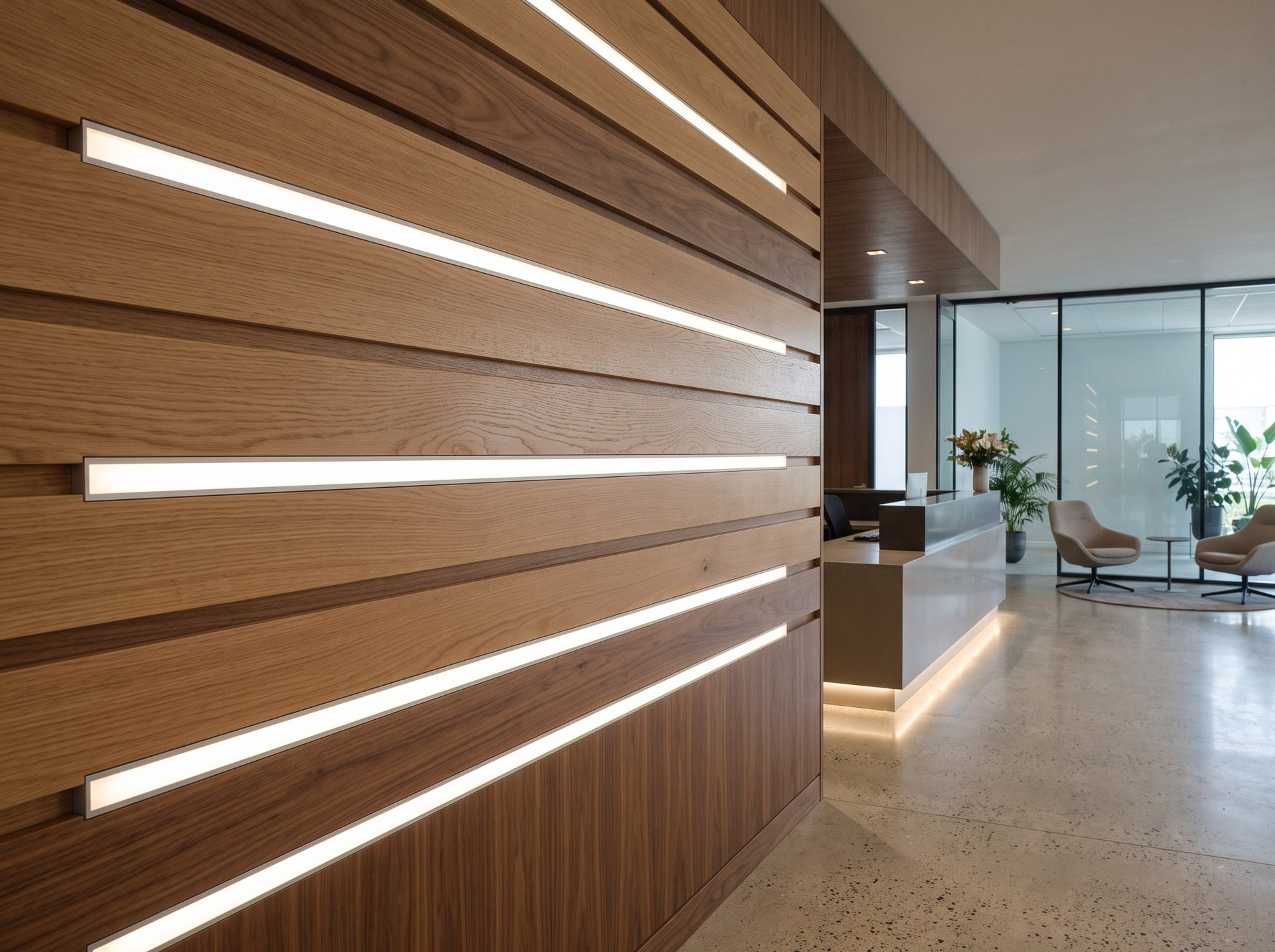
1. Choosing the Right Extrusion Profile for Millwork & Coves
- Recessed Flanged Channels: Designed with an outer rim that sits flat against surrounding material. Essential for flush-routed CNC slots in wood paneling, retail shelving, and solid-surface countertops to hide rough wood cuts.
- Surface-Mount Profiles: Ideal for indirect cove illumination, under-cabinet lighting, or hidden soffit details where the profile itself is concealed from line of sight.
- 45-Degree Corner Profiles: Directs output at an angled plane—perfect for retail display cases, under-cabinet task lighting, and interior wardrobe millwork.
2. Achieving “Dot-Free” Diffused Output
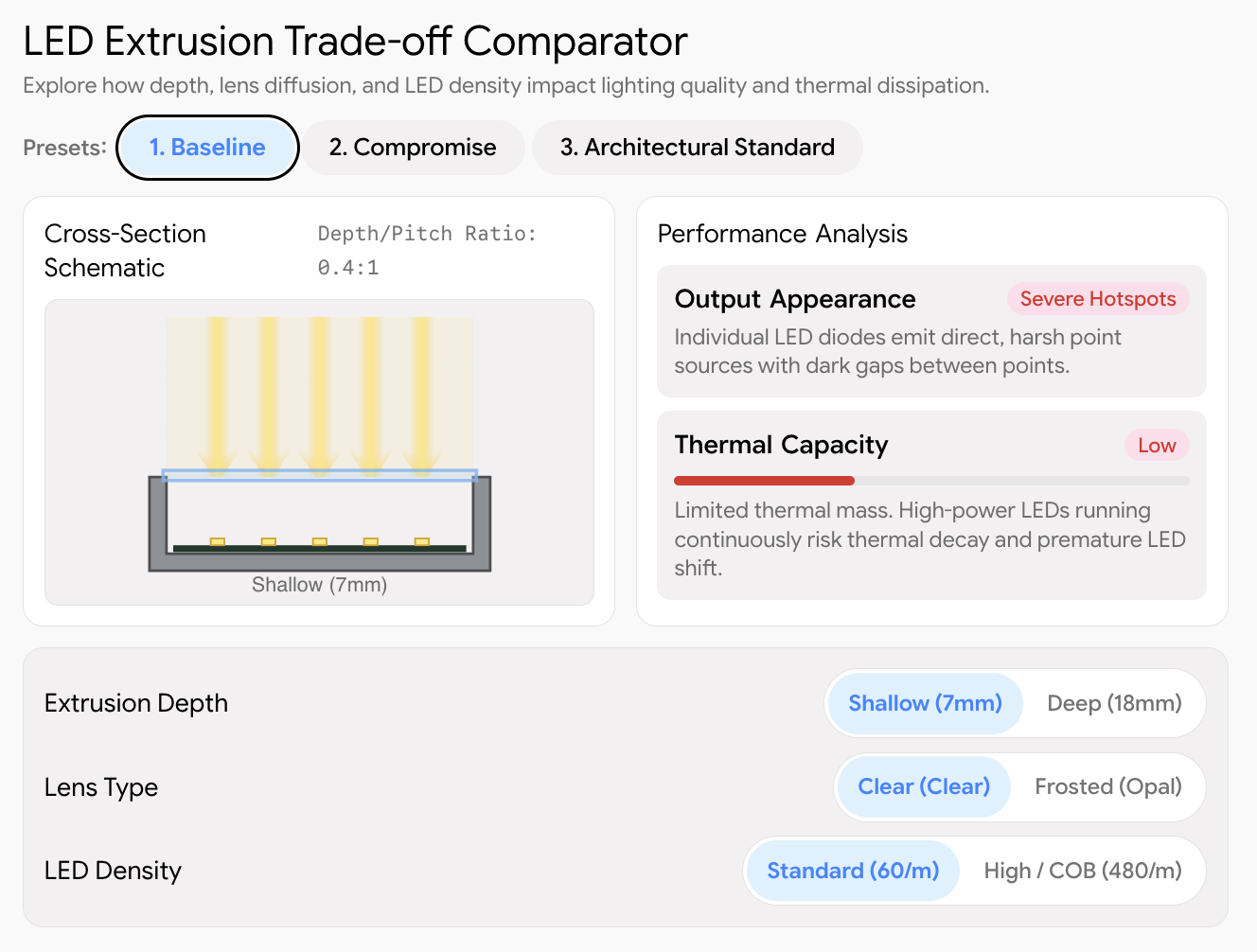
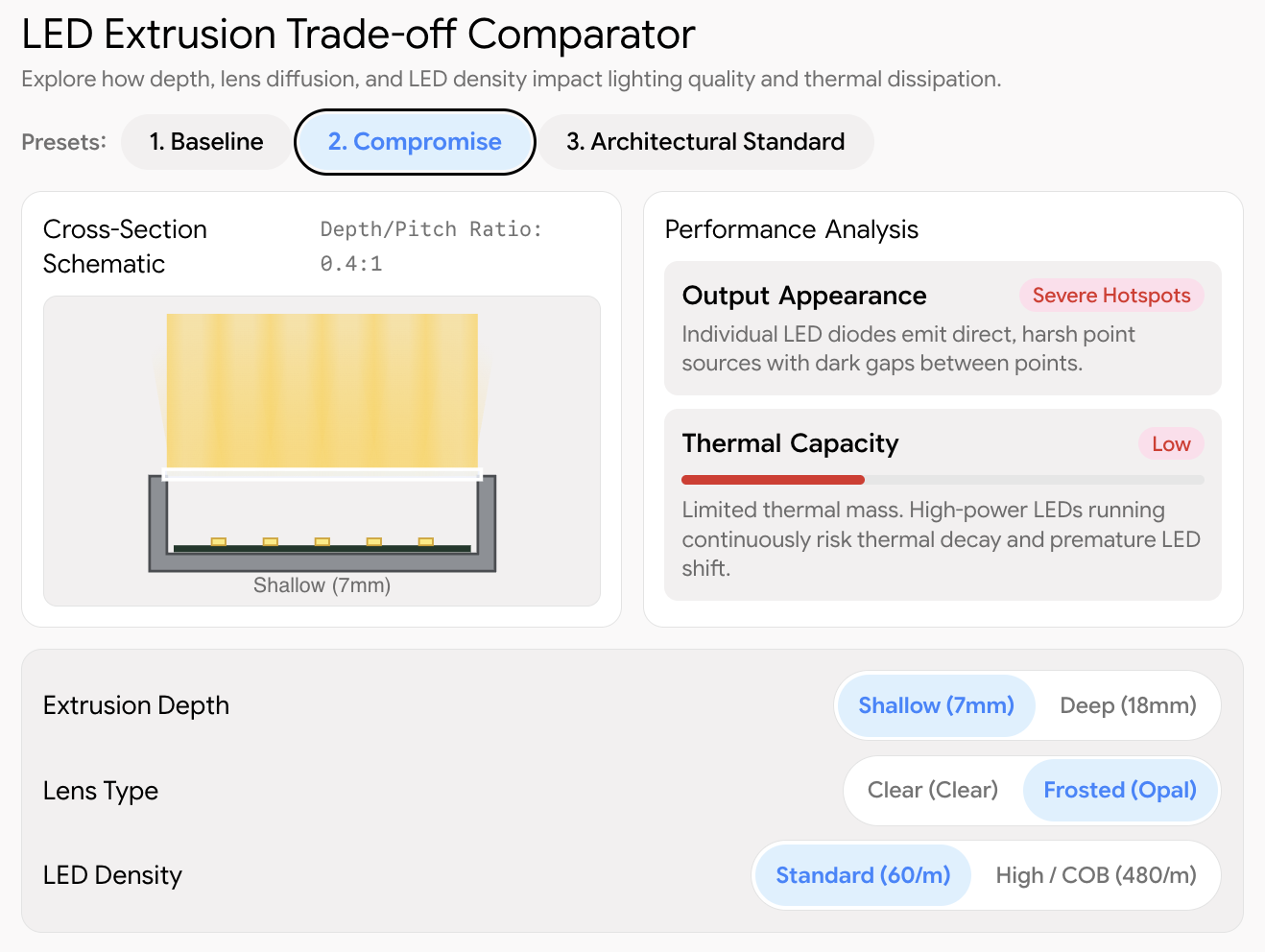
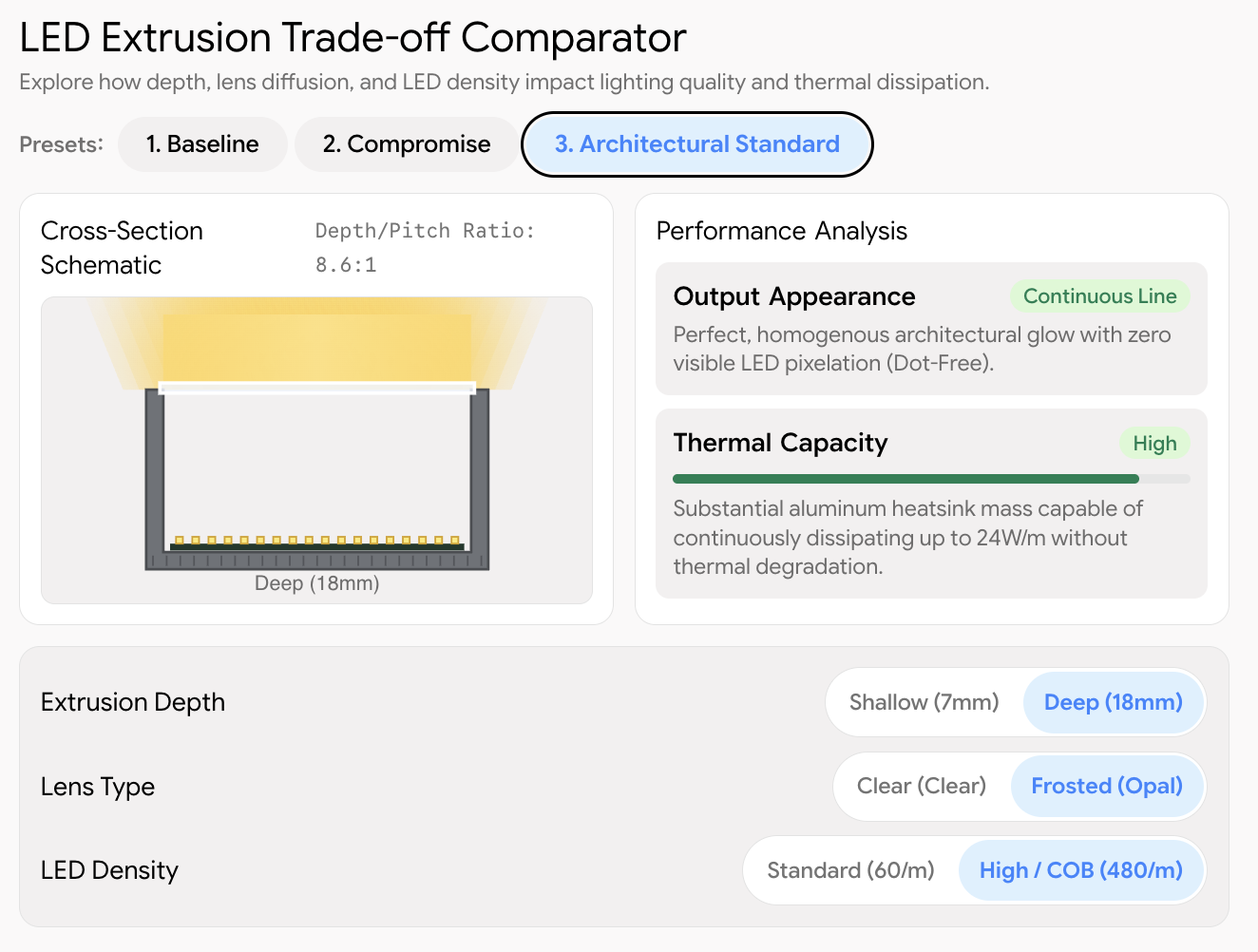
One of the most common complaints from lighting specifiers is seeing individual LED diode reflections (“hotspots”) on glossy countertops or wood finishes. To eliminate hotspots and achieve a solid, continuous beam of light, balance three critical design factors:
- Diode Density: Specify High-Density LED tape (such as 120+ LEDs per meter) or COB (Chip on Board) LED strips.
- Channel Depth: Deep extrusions allow the light output from adjacent diodes to blend fully before reaching the lens. Shallow profiles require much higher diode counts to prevent spotting.
- Diffuser Lens Finish:
- Frosted / Opal Lenses: Provides 70–80% light transmission while completely diffusing hotspots. Best for direct-view installations
- Clear / Semi-Frosted Lenses: Offers 90%+ light transmission with minimal diffusion. Recommended for indirect cove lighting where the channel is completely hidden
3. Power & Control Considerations for Integrators
When architectural millwork requires complex dimming tied to a central smart building system, driver selection is critical.
Custom fabricators should plan wiring exit holes behind the extrusion and incorporate small access panels for the power supplies. By utilizing 5-in-1 LED Drivers, integrators can seamlessly connect the architectural extrusions to 0-10V, Triac, or ELV building automation systems without needing proprietary hardware adapters.
Key Takeaway for Commercial Specifiers
To deliver a clean, professional linear lighting detail:
- Always specify UL Listed extrusion, strip, and driver combinations to streamline site inspections.
- Pair high-density LED tape with frosted lens profiles for direct-view millwork.
- Choose versatile 5-in-1 drivers to ensure compatibility with any commercial building dimming system.







Leave A Comment
You must be logged in to post a comment.