
What Is the Best DMX Control Setup for Large Lighting Installations?
A DMX system running a handful of fixtures is straightforward enough.
A DMX system managing hundreds or thousands of fixtures across multiple buildings, zones, and architectural elements is a completely different conversation.
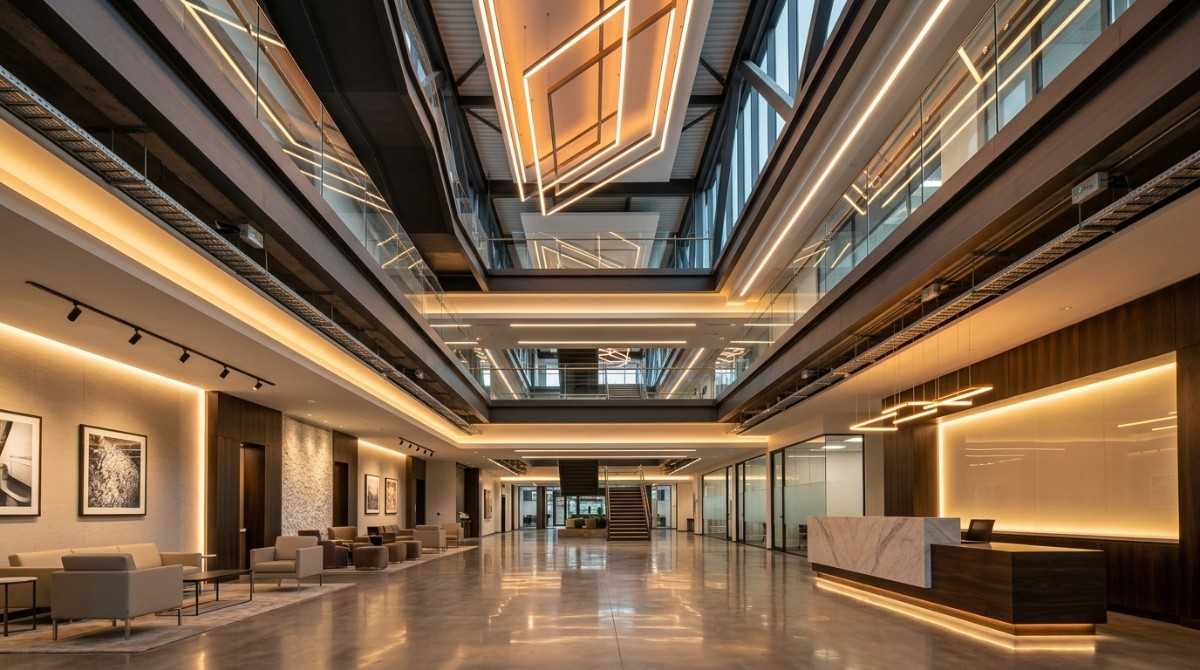
Large-scale lighting installations go well beyond basic fixture control. They pull together functional lighting, architectural accents, dynamic effects, and integrated control strategies into a single environment that has to work reliably every day.
These projects typically involve:
- Hundreds to thousands of fixtures
- Multiple lighting zones
- Long-distance signal distribution
- Centralized control requirements
- Multiple DMX universes
- Network-based communication infrastructure
The hard part isn't controlling one fixture. The hard part is keeping communication clean, the system scalable, and operations stable as the installation grows and changes over time.
That's why the best DMX setup isn't a specific controller, gateway, or software platform. It's a system architecture built to support long-term performance from the ground up.
Core Requirements of a Large-Scale DMX System
Before anyone picks hardware, it's worth getting clear on what the system actually needs to do.
Large installations put different demands on a control network than smaller projects, and the ones that run into trouble down the road are almost always the ones where this step got skipped.
Scalability
Most large lighting systems don't stay the same after installation. Fixtures get added. New zones come in. Control requirements shift.
A scalable system handles that growth without forcing a major redesign. This matters especially in hotels, commercial campuses, airports, entertainment venues, and architectural facade projects, environments where change is the norm, not the exception. Systems that can't grow efficiently become expensive headaches.
Reliability
Commercial lighting infrastructure is expected to show up every day without fail. Communication failures, addressing conflicts, and signal interruptions affect both functionality and appearance, and in customer-facing environments, those failures have real consequences.
Reliable systems are built for continuous operation, large fixture counts, multiple universes, and heavy network traffic. Stability consistently matters more than complexity.
Flexibility
Large installations rarely use a single fixture type. A typical project might combine white LED luminaires, RGB and RGBW fixtures, LED strips, DMX drivers, pixel-controlled systems, and entertainment lighting equipment, all in the same environment.
The control architecture has to handle all of that without creating unnecessary layers of complexity.
Maintainability
Every system eventually needs maintenance. The bigger the installation, the more important it becomes to find and fix problems quickly.
Maintainable systems have structured addressing, clear documentation, organized universe allocation, and logical zone segmentation. The goal is to make future troubleshooting straightforward, not something the next technician has to reverse-engineer from scratch.
Recommended Architecture for Large Installations
Projects that hold up well over time tend to follow a layered architecture where each layer serves a specific purpose.
Centralized Control Layer
At the top sits the control platform, a lighting console, software-based controller, or dedicated architectural lighting controller. This layer handles scene creation, scheduling, universe assignment, automation logic, and system-wide commands. Rather than talking directly to every fixture, it manages the overall lighting strategy and leaves the detail work to the layers below.
Network Distribution Layer
As installations grow, traditional DMX cabling alone stops being practical. Running individual DMX lines throughout an entire facility gets messy fast.
Network-based protocols, primarily Art-Net and sACN, solve this by transmitting multiple DMX universes across standard Ethernet infrastructure. The network becomes the communication backbone, and scalability improves dramatically as a result.
DMX Node Layer
Nodes sit between the Ethernet network and the physical fixtures. They receive network data and convert it into DMX signals for local fixture groups, a simple role, but a critical one.
This approach distributes control throughout buildings, campuses, facades, and venues without requiring long DMX runs from a central location. It's what makes genuinely large systems manageable.
Fixture Layer
At the edge of the system are the fixtures themselves. Each one gets assigned a universe, a DMX address range, and control parameters. Well-structured addressing makes operation and maintenance significantly easier. Poorly planned addressing becomes a troubleshooting problem that compounds over time.
Best-Practice Setup Structure
Every project is different, but certain architectural principles show up consistently in installations that perform well long-term.
Hybrid Multi-Universe Design
Most large systems benefit from combining Ethernet-based network distribution with local DMX512 control lines. The network handles long-distance communication. DMX manages local fixture control within individual zones. This hybrid approach balances flexibility with reliability in a way that neither method alone can match.
Zone-Based Architecture
Large installations become far easier to manage when divided into functional areas, ambient lighting zones, architectural accents, exterior facade lighting, dynamic effect areas, and feature lighting sections. Each zone runs independently while still operating as part of the broader control environment.
Dedicated Universe Allocation
Poor universe planning is one of the most common causes of unnecessary complexity in large systems.
Intentional allocation makes a real difference. For example:
- Universe 1–4: Interior ambient lighting
- Universe 5–8: Architectural accents
- Universe 9–12: Exterior facade systems
- Universe 13–16: Dynamic feature lighting
Structured allocation keeps the system scalable and makes maintenance significantly less painful.
Hardware Components in an Optimal Setup
DMX Controller or Software Platform
The control platform needs to support multi-universe operation, scheduling, scene management, and network protocols like Art-Net and sACN. As project size grows, controller flexibility becomes increasingly important; a platform that works fine at 10 universes may struggle at 50.
DMX Gateways and Nodes
Nodes are non-negotiable in distributed systems. They let Ethernet infrastructure serve as the communication backbone while keeping compatibility with DMX fixtures and drivers. Without them, large systems become difficult to scale and harder to troubleshoot.
DMX-Compatible LED Drivers
Driver selection influences system performance more than most people expect. Professional DMX drivers deliver stable dimming behavior, consistent color control, reliable communication, and solid integration compatibility. Cheap drivers in a large system create problems that show up at the worst possible moments.
Power Supply Systems
Power infrastructure needs the same level of planning as signal infrastructure, zone-based distribution, proper capacity, load balancing, and room for future expansion. Power stability directly shapes fixture performance, and problems here tend to look like fixture problems until someone checks the supply side.
Signal Distribution Strategy
Signal design gets overlooked until problems appear. In large installations, getting it right from the start saves significant time and money later.
Star Topology
Most professional systems use a star topology, a central network switch distributes communication, individual nodes connect independently, and zones operate without depending on neighboring zones. This layout improves reliability and makes fault isolation much cleaner.
Avoiding Daisy Chain Overload
Traditional DMX daisy chaining works well enough in smaller setups. At scale, long chains complicate troubleshooting and increase vulnerability to signal disruptions. Professional installations generally keep daisy chains limited to smaller fixture groups within individual zones.
Signal Integrity Management
Signal quality needs to hold up across the entire installation. Proper DMX termination, opto-isolated splitters, quality cabling, and structured signal routing all contribute. Small communication issues that seem manageable in a small system become significant problems as fixture counts grow.
Electrical Design Considerations
No control system compensates for poor electrical design. Power and signal infrastructure have to work together.
Load Distribution
Concentrating loads in a single location creates unnecessary risk. Distributing power across multiple zones improves efficiency and reduces stress on individual components, a basic principle that gets ignored more often than it should.
Voltage Drop Management
Voltage drop becomes a real issue over long LED runs. Distributed power supplies, strategic power injection, and shorter load distances all help keep voltage stable. Consistent voltage means better performance and longer component life.
Driver Placement
Keeping drivers reasonably close to their connected loads reduces losses and simplifies maintenance access. It's a detail that pays off over years of operation.
System Programming Strategy
Physical infrastructure is only half the equation. Programming architecture shapes day-to-day performance just as much.
Scene-Based Control
Most large installations run through predefined scenes, day mode, evening mode, event mode, and maintenance mode. Scenes keep operation simple while maintaining visual consistency across hundreds or thousands of fixtures.
Zone Synchronization
Multiple universes often need to move together. Coordinated timing keeps transitions smooth across different sections of the installation. Without synchronization, visual inconsistencies become noticeable in ways that undermine the whole effect.
Time-Based Automation
Scheduling remains one of the most effective tools for improving energy efficiency, operational consistency, and user experience while reducing manual intervention. A well-programmed schedule does more ongoing work than most facilities realize.
Installation Best Practices
Good design can still fall apart with poor execution.
Successful installations stay organized from day one, including universe mapping charts, fixture address records, wiring documentation, and control system diagrams. That documentation becomes one of the most valuable assets on the project when maintenance or expansion comes around, which it always does eventually.
Following recognized electrical standards and commercial best practices throughout the installation supports the kind of long-term reliability that clients actually expect.
Building a System That Can Grow
The best DMX control setup for a large lighting installation isn't defined by a single product. It's defined by architecture.
Systems that hold up over time combine network-based multi-universe distribution, structured zone segmentation, reliable power infrastructure, organized addressing, and scalable control architecture. The installations that struggle are almost always the ones where growth wasn't planned for before growth happened.
At SIRS-E, large-scale lighting systems are treated as integrated environments where power, control, communication, and fixture infrastructure work together from the start. When those elements are designed as a unified system, installations become easier to expand, easier to maintain, and more reliable throughout their working life.
Frequently Asked Question's
What is the best controller for large DMX installations?
A multi-universe controller or software platform supporting Art-Net or sACN provides the scalability most large architectural and commercial projects need.
How many DMX universes can a large system support?
Using Ethernet-based protocols like Art-Net and sACN, large installations can support hundreds or even thousands of universes depending on how the network is designed.
Is DMX alone enough for large lighting systems?
Typically not. Most large projects rely on network-based distribution to move DMX data efficiently across greater distances.
What is the most reliable setup topology?
A star topology built around network switches and distributed DMX nodes is generally the most scalable and reliable approach for large installations.
Can DMX and pixel systems be used together?
Yes. Many professional installations combine traditional DMX-controlled fixtures with pixel-based systems to handle both architectural lighting and dynamic visual effects within the same environment.










Leave A Comment
You must be logged in to post a comment.