
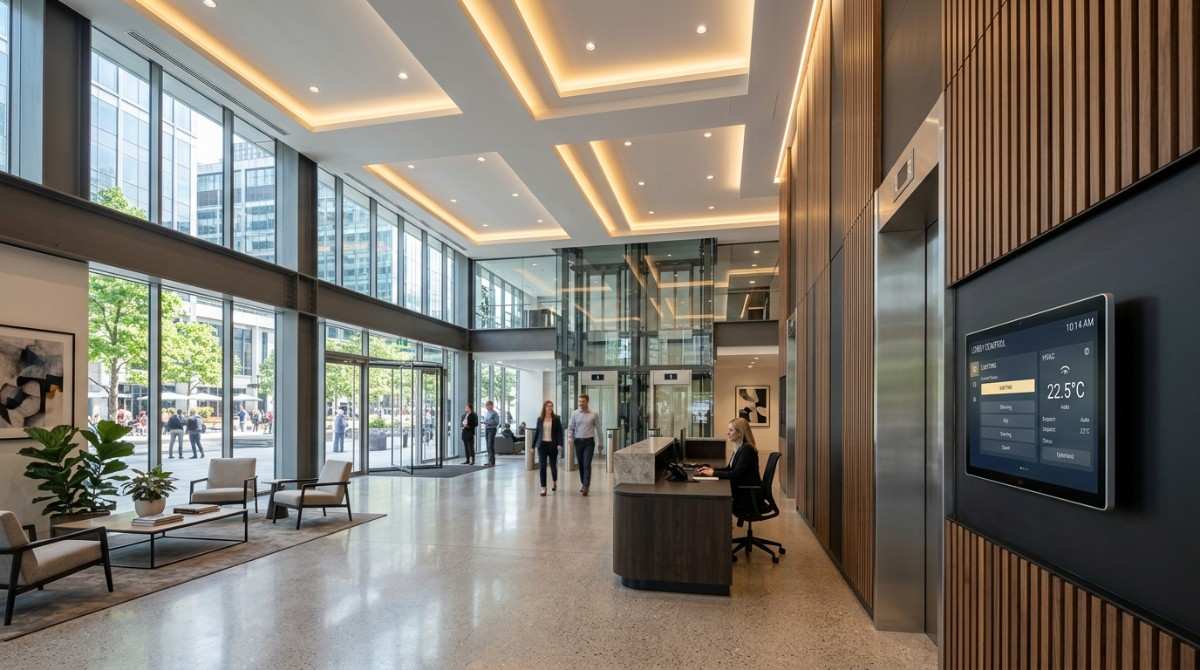
Long-Term Care and Performance Optimization for DMX LED Installations
Most DMX LED installations are built to run for years without skipping a beat.
Architectural facades light up every night. Entertainment systems cycle through hundreds of shows. Commercial environments rely on lighting that shows up consistently, shift after shift, season after season.
The U.S. LED lighting market generated approximately $18.1 billion in revenue in 2025 and is projected to reach $31.5 billion by 2033, reflecting the increasing reliance on LED-based lighting systems in commercial, architectural, industrial, and entertainment environments
Right after installation, everything checks out. Fixtures respond on cue. Colors look right. Signal communication holds steady.
Then time passes.
New fixtures get added to the rig. Control zones expand. A renovation changes the cable routing. Environmental wear starts showing up in places nobody checked. Small shifts in power, signal, and configuration begin adding up in the background.
None of this causes an immediate crash. But it does quietly pull the system away from where it started.
A setup that ran perfectly two years ago starts showing occasional flicker. Output becomes uneven across zones. Responses feel sluggish. Colors drift in ways that are hard to pin down. No single component is obviously broken; the system has just drifted from how it was originally configured.
That gap between maintenance and optimization is where most long-term performance problems live.
Fixing things after they break is maintenance. Keeping a system sharp as it grows and changes, that's optimization. At SIRS-E, power, control, and communication are treated as layers that have to keep working together throughout the life of the DMX LED installation. Not just at startup.
How DMX LED Systems Change Over Time
A lighting system doesn't freeze in place once the installation is done.
Fixtures get added. Zones expand. Programming evolves. Network infrastructure gets updated along the way. These aren't unusual events; they're just how professional lighting environments operate over time.
Common changes that accumulate include:
- Expansion of DMX universes
- Additional fixtures and control zones
- Software and firmware updates
- New automation requirements
- Modified lighting scenes
Meanwhile, the physical system keeps aging on its own timeline. Heat cycles stress drivers and power supplies. Connectors loosen with repeated use. Cables stiffen and crack. Power supplies run under continuous load for years on end.
The outcome is rarely a dramatic failure. It's a gradual drift. Barely noticeable signal inconsistencies become harder to ignore. Power draws shift away from original design assumptions. Control configurations grow cluttered. Left unchecked, these small changes slowly wear down system stability.
Key Areas of Long-Term Care
1. Power System Stability and Optimization
Everything downstream depends on what's happening with power. Stable power distribution gives the rest of the system a reliable foundation; unstable power quietly undermines everything attached to it.
LED fixtures, drivers, and controllers all need consistent voltage to behave predictably. Over time, power distribution should be checked for:
- Voltage consistency across zones
- Proper load allocation
- Driver performance under current conditions
- Available headroom for future expansion
Small voltage irregularities that seem minor on their own can create real problems when they multiply across dozens of fixtures and control zones.
Load distribution tends to drift as installations grow. What was balanced at the start can become lopsided as zones expand and equipment gets added. Uneven loads show up as dimming inconsistencies, flickering, and accelerated component wear, problems that look like fixture issues but actually start at the panel.
Sometimes optimization here isn't about adding anything. It's about looking honestly at how existing equipment is being used, checking load utilization, reviewing driver efficiency, finding unused capacity, and trimming margins that are doing more harm than good.
2. DMX Signal Integrity Over Time
Signal problems rarely announce themselves. They build up slowly, and by the time flickering or dropped frames become visible, the underlying issue has usually been present for a while.
Several factors degrade communication quality over time:
- Cable wear and connector fatigue
- Environmental exposure and temperature cycling
- Physical vibration in high-activity venues
- Routing changes made during renovations
None of these causes immediate failure on its own. Together, over time, they create the kind of instability that makes a system unreliable without any obvious single cause.
Keeping signal paths healthy means routine validation, swapping out degraded cables, confirming termination, testing splitters and distribution devices, and checking node functionality. None of it is complicated, but skipping it consistently is one of the fastest ways to turn a reliable system into an unpredictable one.
3. Fixture Performance and LED Degradation
LEDs last a long time. But lasting a long time and performing consistently aren't quite the same thing.
Gradual changes that show up over years of operation include:
- Overall brightness reduction
- Color temperature drift
- Uneven output between fixtures
- Pixel inconsistencies in addressable systems
These shifts happen slowly enough that they often go unnoticed until two sections of an installation are compared directly. By that point, the gap can be significant.
Keeping visual consistency across an installation usually means periodic recalibration, adjusting brightness levels, correcting color output, reprogramming zones that have drifted, and replacing aging sections where the gap becomes too wide to close through software alone.
Environmental conditions push this process along faster in some locations than others. High ambient temperatures, humidity, dust, outdoor exposure, and vibration all accelerate aging. Monitoring these conditions regularly helps catch problem areas before they become visible to end users.
4. Control System Optimization
Control systems accumulate complexity over time. New requirements get layered on top of existing ones. Fixtures get added to scenes that were built years ago. Programming that made sense at the time starts producing odd results as the system around it changes.
Keeping controllers, nodes, and software platforms compatible requires periodic review, checking firmware consistency, confirming controller compatibility, and verifying that communication protocols are still stable across all devices. Small misalignments between devices that were once in sync create entirely avoidable troubleshooting situations.
Programming cleanup matters too. Scenes built years ago may no longer reflect how the space actually runs. Timing adjustments, sequence refinement, removing redundant cues, and cleaning up trigger logic all make a system more responsive and easier to manage day to day.
As systems grow, control architecture can become more complicated than it needs to be. Consolidating universes, clearing out unused control paths, and streamlining controller assignments often produce a more stable system without touching a single fixture.
5. Network-Based System Performance
For Art-Net and sACN installations, the network isn't just infrastructure. It's part of the lighting system. Network performance directly shapes lighting performance, and the two have to be managed together.
Traffic management becomes more critical as lighting networks grow. Switch performance, bandwidth utilization, and network congestion all need regular attention. A network running at capacity or poorly organized introduces latency and packet loss that show up as lighting behavior nobody programmed.
IP address structure matters more than people expect in large systems. Organized addressing prevents conflicts, keeps communication clean, and makes troubleshooting dramatically faster when something does go wrong.
Common network optimization steps include reviewing topology, eliminating unnecessary traffic, improving data paths, and isolating lighting traffic onto dedicated network segments where the installation warrants it.
Performance Optimization Strategies
Optimization works best when the system is looked at as a whole.
Power, signal, and control all affect each other. Fixing a signal issue without addressing the power irregularity driving it produces temporary results. Cleaning up control architecture without reviewing network performance misses half the picture.
Practical optimization strategies that consistently deliver results:
- Simplifying control structures that have grown cluttered
- Consolidating universes where practical
- Removing unused fixtures, zones, or scenes
- Improving signal distribution across longer runs
- Streamlining controller workloads
- Cleaning up the network organization
The common thread is reducing complexity, not adding it. Systems that are simpler to understand are easier to maintain, faster to troubleshoot, and more stable under real operating conditions.
Good optimization also sets the system up for what comes next. Structured universe planning, modular wiring, and scalable controller architecture make future expansion cleaner and less disruptive to what's already running.
How SIRS-E Supports Long-Term System Performance
At SIRS-E, a lighting installation is treated as an integrated environment, not a collection of separate products that happen to be in the same building.
Hardware, software, control systems, network infrastructure, and power distribution all influence each other. Support is focused on how the system behaves as a whole, not on individual components in isolation.
That support covers system evaluation, performance analysis, compatibility reviews, control architecture guidance, and scalability planning, all aimed at keeping installations running reliably and adapting cleanly as requirements change.
Long-Term Performance Requires More Than Maintenance
Most DMX lighting systems are built to run for years. That part tends to take care of itself.
The harder question is how well they'll keep running, and whether the system will still be manageable, scalable, and visually consistent five years from now.
That depends on staying on top of power distribution, signal communication, control architecture, and environmental conditions together. When those areas are reviewed and adjusted as a group, lighting systems hold up better, stay easier to work with, and handle growth without falling apart.
That's the approach SIRS-E takes, keeping architectural, entertainment, and commercial installations performing at the level they were designed for, long after the install crew has moved on.
Frequently Asked Question's
What is long-term care in a DMX LED installation?
This includes ongoing monitoring and maintenance of power systems, DMX infrastructure, fixtures, and control settings, all the elements that contribute to decades-long operational reliability.
What Makes DMX LED Systems Perform Poorly?
Stress in the power supply, aging cables, environmental wear, signal integrity issues, mismatch of firmware, and changes introduced at the time of expansion in configuration are common causes.
How often should one review the DMX LED system?
Routine checkups during the year yield the best benefits for most professional installations, while comprehensive evaluations are due after big upgrades, renovations, or significant system expansions.
Can we optimize performance without all the new hardware?
Quite often, yes. Quite a few performance agony points are remedied without a single change to the hardware, recalibration, signal-path work, firmware alignment, network nicenesses, and control system cleanup.
Does SIRS-E support long-term optimization of system behaviors?
Yes. Our ServicesSIRS-E provides technical support to integrators, contractors, and project teams in the areas of system evaluation, compatibility guidance, performance optimization, and integration-related technical services.




Leave A Comment
You must be logged in to post a comment.