
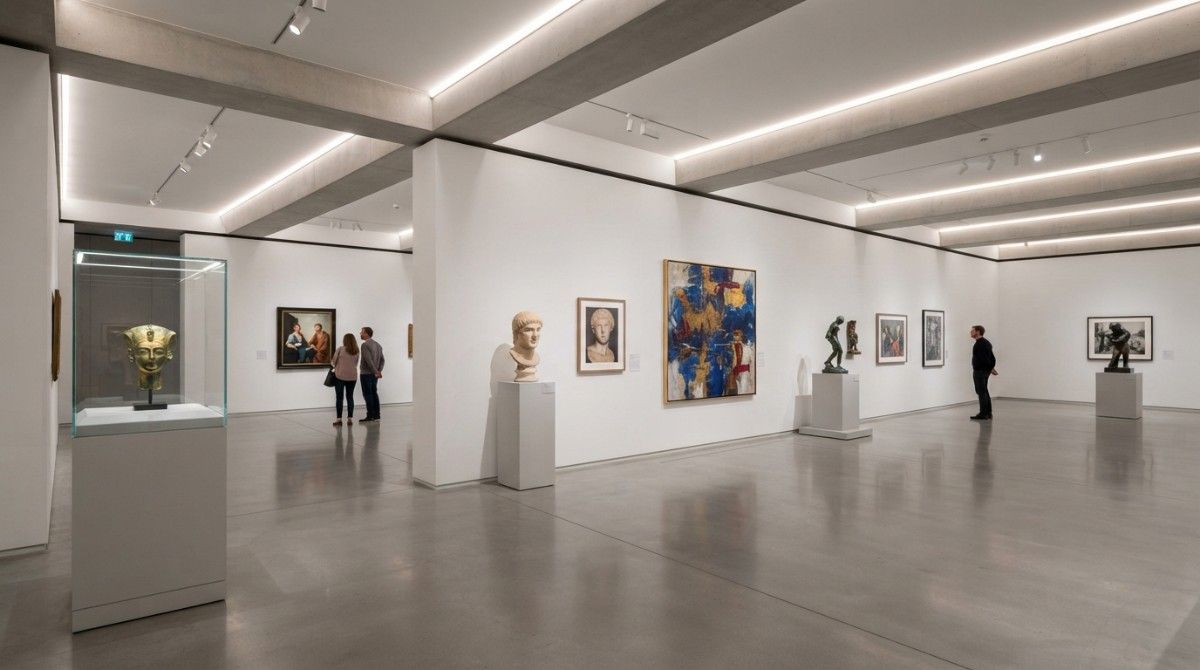
LED Strip Solutions for Museums and Galleries
Every museum and gallery realizes how crucial lighting is, as it assists in simply showing off artwork, artifacts, sculptures, and exhibits accurately so all visitors have a high-quality experience. Lighting should beautifully yet briefly provide enough illumination of an object so that it does not become a distraction to the collections on display while preserving correct high-level aesthetics and long-term reliability.
That is why they have LED strip lights inside these fixtures, so it has become the top choice for exhibition spaces, as this kind of lighting can offer consistent and ideal illumination while also blending in carefully into display cases, architectural features, and even custom installations. Choosing LED strip systems carefully engineered helps in getting consistent performance, reliable operation, and lighting throughout the life of the project.
Here are just a few reasons that LED strip lighting is perfect for modern museums and galleries.
Why Lighting Plays a Critical Role in Museum and Gallery Design
Lighting influences the way visitors see each exhibition. It impacts accessibility, points up details, and creates ambiance without clashing with the nature of the displayed works or artifacts.
Lighting is key. Poor lighting can ruin an otherwise well-curated exhibit. Uneven, bright lighting, glare, or poor color rendering can distort the appearance of paintings, sculptures & textiles and historical objects and make it harder for visitors to appreciate their true character.
Alternatively, good lighting emphasizes textures and portrayals of fine details as well as the accurate representation of colors. It also aligns with the architectural scheme of the gallery by accentuating feature walls, exhibit zones, and circulation paths while ensuring that a comfortable view is maintained at all times.
Often, they are still waiting for the technology to meet their basic needs: reliable performance accompanied by quality visuals that meet museums and galleries. Designers are seeking illumination systems that reliably provide the desired visual experience in conjunction with pristine custom architectural elements, or exhibit installations.
Why LED Strip Lights Are Ideal for Museum and Gallery Applications
For architectural and exhibit lighting applications, LED strip lighting provides impressive versatility. The small size also means it can be installed in places that traditional fixtures cannot fit, allowing for clean, break-up-free visual presentations.
Benefits you will get from it are as follows:
- Slim, low-profile construction
- Flexible installation options
- Even, continuous illumination
- Easy integration into architectural details
- Applicable for new construction and renovation.
- Compatible with modern ideas in museum and gallery design
Since LEDs allow for hiding the LED strips in display cases, shelving, niches, coves, and millwork, they can light up exhibits while avoiding being part of a visual distraction. The art is what visitors experience, not the fixture.
This versatility enables lighting designers to customize the illumination in each exhibit space according to the specific requirements needed for that exhibit, while maintaining a consistent feel of lighting throughout the museum or gallery.
Common Museum and Gallery Applications for LED Strip Lighting
LED strip lighting that is professionally engineered can be designed into the exhibition spaces to fulfill both functional and decorative lighting needs.
Display Cases and Exhibit Cabinets
Many items in display cases are rare and valuable objects that need to be illuminated with strict control.
LED strip lighting within cabinets can be used to:
- Illuminate artifacts without visible fixtures
- Emphasize fine craftsmanship and intricate details
- Create a clean, refined presentation
The light sits inside the display so that it does not draw attention from the collection itself but rather enhances it.
Wall Washing for Artwork
Smooth and even lighting across the surface of paintings, photographs, and graphic displays.
LED strip lights for wall washing applications assist with:
- Provide even illumination across artwork
- Reduce uneven brightness
- Support consistent display across gallery spaces
Every area in the gallery must be lit uniformly to ensure visitors can appreciate multimedia artists' work, recognizing that variances in distribution in shining can disturb folks off through experiencing the skill.
Cove and Ceiling Lighting
Luminance, ambient lighting, and color temperature of lighting play an important role in setting the atmosphere of museums and galleries.
Incorporate new style to cove & ceiling details with LED strip lights which can:
- Provide comfortable ambient illumination
- Enhance architectural features
- Improve the overall visitor experience
Exhibiting lighting that layers on ambient light creates inviting, balanced spaces that help establish visual comfort.
Shelving, Niches, and Built-In Displays
Many museums & banks utilize built-in structures to showcase sculptures, historical artefacts, and special collections.
LED strip lighting helps:
- Accent sculptures and artifacts
- Create visual depth
- Highlight key features of the exhibit
The compact profile allows for installations that can be shipped blended into custom millwork or display systems.
Wayfinding and Architectural Accents
In addition to exhibits themselves, LED strip lighting can help improve the navigation of the facility as well.
Applications include:
- Pathway lighting
- Stair illumination
- Reception areas
- Feature walls
- Architectural accents
Such installations provide an increase in safety and orientation, while conforming to the high-quality atmosphere common to galleries.
Key Features to Look for in Museum LED Strip Lighting
Various performance metrics directly impact exhibit quality and long-term functionality.
Why High CRI for Accurate Color Rendering
Lighting with a high Color Rendering Index (CRI) preserves the fidelity of colors in artwork, historical artifacts, textiles, and museum collections.
Museum applications require high-CRI light to reproduce color accurately enough for visitors to experience the exhibit in its intended form.
Consistent Color Temperature
A uniform color temperature helps to create a visually contiguous environment across galleries and exhibit spaces.
Even lighting avoids any variations between different display areas and keeps your visitor engaged throughout the experience.
Uniform Light Distribution
Uneven lighting results in hotspots and harsh transitions that divert attention from the exhibits, the unit said.
Quality LED strip systems are designed to produce lighting that balances and enhances art without overwhelming it.
Reliable Performance
Museum lighting mostly runs several hours per day, every day.
LED strip systems enable wider options: Long-term performance with reduced maintenance and less disruption to exhibits.
Compatible System Components
When the LED strips, drivers, controllers, power supplies, and dimming components are designed to work together as a complete lighting system, they achieve the best results.
To simplify installation and ensure reliable long-term operation, system compatibility is critical.
Why Long-Term Reliability Matters in Exhibition Spaces
A lot of displays in museums remain at a single spot for months or sometimes years. Many of the lighting systems end up behind enclosures such as display cases, architectural coves, and custom millwork, meaning maintenance is often a bit less than convenient.
Changing out lights in these spaces often requires removing exhibit elements or reaching built-out finishes, which both come at the expense of increased labor and downtime.
You should make sure the LED strip system offers a reliable:
- Long service life
- Stable lighting performance
- Reduced maintenance requirements
- Fewer replacements
- Lower long-term operating costs
With reliable lighting, you do not have to worry about any gaps in the visitor experience. The uniform illumination maintains exhibits in the way they have been presented while aesthetic fettle is performed outside of hours that could interrupt museum business.
Why Architects and Exhibit Designers Choose Professionally Engineered LED Strip Systems
Museum lighting projects demand more than consumer-grade products. Architects, exhibit designers, and lighting professionals rely on systems created for commercial and architectural solutions.
Pros of professionally configured LED strip approaches include:
- Consistent manufacturing quality
- Comprehensive technical documentation
- Engineering and specification support
- Compatible lighting system components
- Commercial-grade performance
Assured availability of product for phased projects and future growth
These properties allow project teams to confidently specify the lighting while streamlining installation and providing future-ready, trouble-free long-term operation.
Exhibits are often added over time, with museums expanding galleries, renovating exhibits and/or adding new collections periodically to keep visitors engaged and return visits high, so consistent manufacturing helps ensure a familiar lighting here too.
Why Choose SIRS-E LED Strip Solutions for Museums and Galleries?
Museum lighting calls for accuracy, uniformity, and reliability. The 2835 LED Strip Lights are made in the USA by SIRS-E to accommodate professional architectural lighting addressing museum, gallery, and other exhibit environments.
2835 LED strips that provide High-CRI help showcase artwork, artifacts, and historical collections in true natural colors and give visitors a wraparound experience of an exhibit as planned. Uniform light output delivers crisp, smooth lighting to display cases, gallery walls, courtesy shelving, and architectural elements.
Offered in a range of white color temps, these LED strip solutions can fit into nearly any exhibit style, architectural finish, and lighting design.
The low-profile, flexible construction enables easy integration into custom display cases, coves, built-in shelving, and millwork or specialty exhibit installations with a clean architectural aesthetic.
SIRS-E also offers dimming solutions, drivers, and other lighting components designed for compatibility from component to system level in an architectural lighting application. In conjunction with engineering expertise and technical support, these integrated solutions provide architects, exhibit designers, and lighting professionals the confidence to specify for challenging museum applications.
Conclusion
Proper LED strip lighting gives museums and galleries the ability to display exhibits using consistent and accurate color rendering with reliable long-term performance. They provide the scalability, architectural integration, and ubiquity required by high-performance exhibition environments.
SIRS-E designs two types of LED strip lighting specifically designed for professional architectural use, all made in the USA. Contact SIRS-E and explain your museum or gallery lighting project, and learn about LED strip options that provide you with the capability for high-quality, long-lifespan exhibition lighting!
Frequently Asked Questions
Why are LED strip lights used in museums and galleries?
LED strip lights provide even illumination around displayed artwork, artifacts, and display cases without distracting visitors while remaining discreetly integrated into the exhibit's design.
Why do 2835 LED strips work for artwork lighting and exhibit lighting?
2835 HIGH-CRI LED Strips are well-suited for museum collections, art pieces, and historical artifacts due to their consistent, accurate color rendering and ample white temperature options.
How does high CRI LED lighting improve museum displays?
High CRI lighting reproduces colors more faithfully, making paintings, textiles, sculptures, and artifacts look closer to how they appear in the natural light that humans have evolved under.
Where can LED strip lights be installed in galleries and exhibition spaces?
LED strip lighting can be used for display cases, exhibit cabinets, wall-washing systems, or built right into shelving, niches, coves & ceilings- everything from reception areas to pathways to unique architectural features.
Why choose professionally engineered LED strip solutions for museum lighting?
Instead of a chaotic selection of random components, professional systems provide consistent manufacture, reliable functioning, compatible parts, technical documentation, and engineering support, each contributing to long-term reliability, which is vital for commercial museum & gallery installations.







Leave A Comment
You must be logged in to post a comment.