
LED Lighting Applications by Industry | Commercial, Creative & Industrial Solutions
Overview of Industry-Specific LED Lighting Applications
LED lighting is used in a lot of places. That part isn’t new.
What changes is how hard the system is pushed, how long it runs, and what happens when something goes wrong. A setup that’s fine in a showroom doesn’t behave the same way on a factory floor. Lighting that looks stable in person can cause issues once a camera is involved. And systems that seem simple often fail because power or control was treated as an afterthought.
Those differences matter.
Professional environments don’t tolerate guesswork. They require LED systems that are designed for the way they’ll actually be used electrically, mechanically, and over time.
At SIRS-E, we design and manufacture LED lighting in the United States with that reality in mind. The focus stays on safety, stable power, and systems that hold up long after installation.
How LED Lighting Requirements Differ Across Industries
No two industries use lighting the same way. The differences are not cosmetic. They’re technical.
Some environments run lights for a few hours a day. Others run them continuously. Some installations stay clean and climate-controlled. Others deal with heat, vibration, dust, or movement. Electrical infrastructure also varies. So do control requirements.
Common factors that change from one industry to another include:
Operating Time
Systems built for intermittent use won’t hold up in continuous-duty environments.
Environmental Stress
Heat, airflow, and physical conditions affect materials, wiring, and component life.
Electrical Conditions
Voltage stability and load distribution play a major role in performance.
Control Complexity
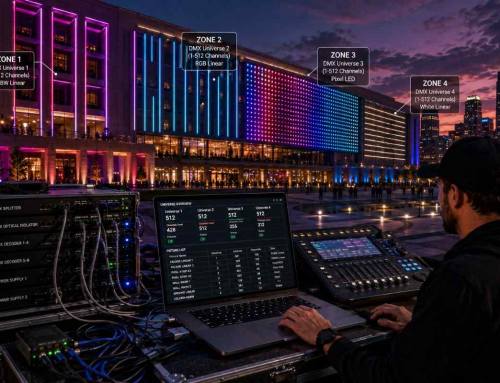
Basic dimming works in some spaces. Others require multi-channel DMX control.
Compliance and Safety
Many professional environments require certified components and documented standards.
Ignoring these differences leads to flicker, failure, or unsafe installations. Designing for them prevents those issues before they start.
How We Design LED Lighting for Professional Applications
U.S.-Based Engineering and Manufacturing
Professional systems begin with engineering, not assembly.
SIRS-E designs, tests, and manufactures LED lighting systems in the United States. This keeps control where it matters; component selection, tolerances, testing, and consistency from one production run to the next.
In-house manufacturing allows:
- Predictable electrical performance
- Consistent output across installations
- Long-term product reliability
- Clear technical accountability
For specifiers and integrators, consistency matters more than marketing claims.
Safety and Certification Standards
Electrical safety is not optional in professional lighting.
UL certification functions as the primary standard for constructing and assessing SIRS-E systems. The process of certification requires complete product testing and inspection together with continuous monitoring of compliance requirements. The process verifies that products maintain compliance with established safety standards throughout their operational lifespan.
Certified systems reduce risk. They also simplify approval, inspection, and long-term operation in commercial and industrial environments.
Power Management and System Performance
Most LED problems come down to power.
Supplies that are undersized. Voltage drop on longer runs. Distribution that wasn’t planned for the load. That’s what leads to flicker, uneven brightness, and early failure.
We design systems with power in mind from the start like correct operating voltage, power supplies sized for real conditions and layouts that account for distance and control method.
When power is right, LED systems stay stable. When it isn’t, issues show up fast.
Technical Documentation and Project Support
Good installs start with clear information.
Datasheets, wiring references, and specifications matter before anything is installed. They help teams plan correctly and avoid problems later.
We provide technical documentation and support to guide that process from planning through deployment.
LED Lighting Applications by Industry
Below are common professional environments where application-specific LED lighting design plays a critical role.
Commercial and Architectural LED Lighting Applications
Offices, hospitality spaces, retail architecture, and public buildings all demand lighting that performs reliably day after day.
Key priorities include:
- Even illumination without visual fatigue
- Dimming compatibility with building systems
- Efficient operation over long hours
- Durable construction for extended service life
These environments reward consistency more than novelty.
Film, Television, and Broadcast LED Lighting Applications
Camera-based environments expose problems the human eye often misses.
Flicker, refresh rate limitations, and unstable power become visible on screen. That makes electrical design and control precision essential.
Broadcast and production environments often require:
- Flicker mitigation through proper hardware design
- High refresh rates for camera compatibility
- DMX-based control for fine adjustments
- Stable output during long production cycles
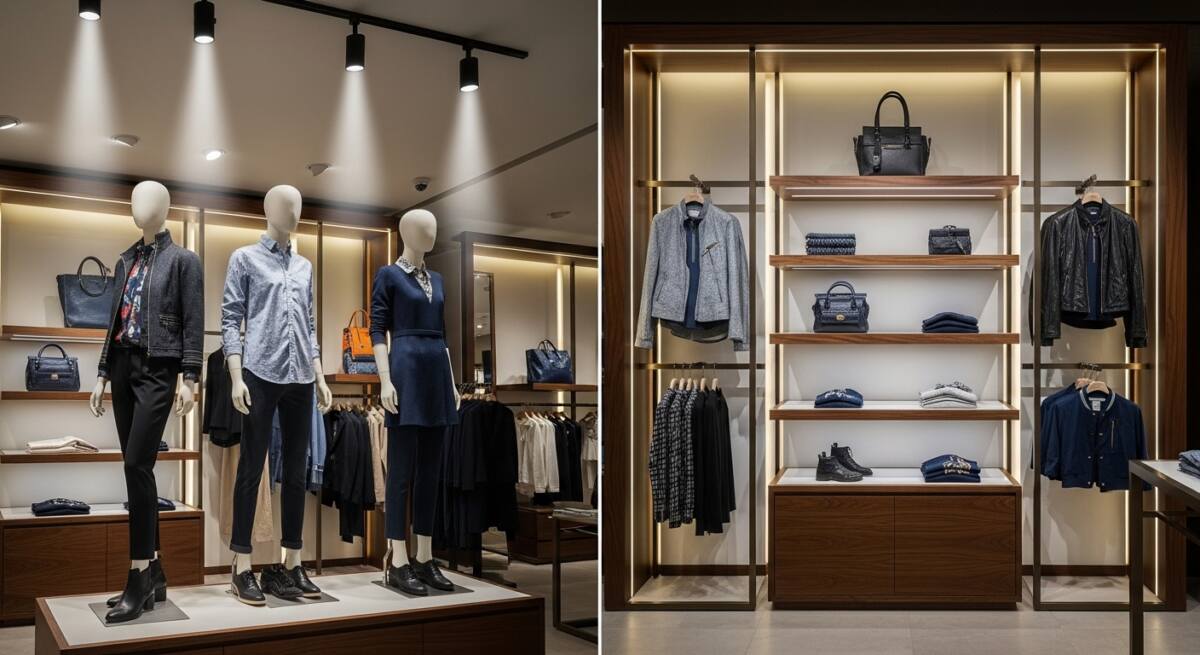
Retail and Display LED Lighting Applications
Retail lighting needs to look consistent; across locations, displays, and time.
Color quality, brightness uniformity, and reliability matter more than raw output. Systems also need to handle daily on/off cycles without degradation.
Common requirements include:
- Visual consistency across installations
- Stable color output
- Reliable daily operation
- Clean integration into display structures
Industrial and Manufacturing LED Lighting Applications
Industrial spaces demand durability first.
Lighting systems in factories and warehouses must tolerate electrical stress, environmental exposure, and long operating hours, all while meeting safety and compliance requirements.
These environments prioritize:
- Electrical stability
- Certified components
- Reduced maintenance
- Long service life
Creative and Experiential LED Lighting Applications
Museums, exhibits, and custom installations often push systems beyond standard layouts.
Flexibility matters, but so does reliability. Control systems must integrate cleanly, and performance must remain stable throughout the life of the installation.
These projects typically require:
- Control system compatibility
- Consistent output across custom configurations
- Support for complex integration
- Reliable long-term operation
Residential and Specialty LED Lighting Applications
Residential, RV, and specialty installations often operate with limited space and fixed power constraints. In these environments, using certified components and maintaining stable electrical design is critical for safe and reliable operation.
Key considerations include:
- Certified electrical components
- Proper power management
- Consistent performance
- Reliability beyond consumer-grade products
Shared Technical Requirements Across Professional LED Lighting Applications
No matter where LED lighting is used, a few things always matter. When systems fail, it’s usually because one of these was overlooked.
Safety Certification and Compliance
Electrical safety isn’t something you add later.
Certified components reduce risk during installation and over the life of the system. They also make approvals and inspections easier, especially in commercial and industrial settings. In many projects, certification is required. In others, it’s simply the safer path.
Stable Power and Electrical Design
LED systems are sensitive to power problems.
If voltage drops, output changes. If supplies are undersized, components run hotter. These issues don’t always show up right away, but they show up eventually.
Designing for proper load, distance, and distribution keeps performance steady and prevents avoidable failures.
Control Compatibility and System Integration
Control needs to match the electrical design.
Dimming, control protocols, and wiring all interact. When those choices are made separately, systems become harder to configure and less reliable in use.
Planning control early avoids conflicts and keeps the system predictable once it’s installed.
Long-Term Reliability and Performance
Professional lighting isn’t about first impressions.
Systems are expected to run for long hours without constant adjustment or repair. That only happens when components, power, and control are chosen with long-term use in mind.
Reliability comes from the system as a whole, not a single part.
Planning an Industry-Specific LED Lighting Project
Before choosing anything, slow down and look at the job.
Define the Application and Environment
Start with the space.
What kind of environment is it? How often will the lights run? Is it stationary or moving? Clean or industrial? Hot? Tight? These answers matter more than most people expect. They influence how the system should be powered, mounted, and wired.
Ignoring this upfront usually forces compromises later.
Establish Performance and Control Requirements
Next question: what does the lighting actually need to do?
Brightness is one part of it. Control is the other. Some setups only need simple dimming. Others need structured control from day one. Once that decision is made, the rest of the system has to follow it.
This is not something you want to change halfway through.
Review Technical Documentation and Specifications
Before anything gets ordered or installed, check the paperwork.
Voltage. Current. Connection points. Run limits. It’s all in the datasheets and wiring references. Skipping this step is how incompatible parts end up in the same system.
Most problems can be spotted here, if someone takes the time.
Consult Technical Support When Needed
Not every project fits a template.
When layouts get complex, or when power and control overlap in unclear ways, it helps to talk things through. Getting input early is easier than fixing a system that’s already been built.
Explore Industry-Specific LED Lighting Solutions
Different applications call for different system choices. Reviewing product details, technical documentation, and control options can help clarify what fits a specific use case.
For deeper questions around system design, power, or control compatibility, SIRS-E technical team can provide guidance based on the application.
- Explore LED Lighting Products
- View Technical Documentation
- Talk to Our Technical Team
- Explore DMX and Control Solutions
Frequently Asked Questions:
How do LED lighting requirements differ by industry?
Different environments place different demands on power, control, safety, and durability.
Why is UL certification important for professional LED lighting applications?
Certification supports electrical safety, compliance, and long-term reliability.
What role do power supplies and wiring play in LED lighting performance?
They directly affect output stability, flicker, and system lifespan.
When are DMX control systems used in LED lighting applications?
When precise, multi-channel control is required across complex installations.
How can technical documentation support LED lighting project planning?
It helps teams design compatible systems before installation begins.








Leave A Comment
You must be logged in to post a comment.