
Why Electrical Safety Matters in Commercial Lighting Projects
The main aspect of commercial lighting evaluation for people concentrates on assessing three elements which include brightness and color temperature and fixture design. The main element which needs to be considered above all others requires assessment of electrical safety.
The lighting systems of a building connect directly to its electrical network and function throughout most of the year. Poorly designed systems which operate at insufficient installation standards will create two major problems which include overheating and electrical hazards and energy waste. For this reason, commercial lighting projects need to follow all existing building regulations and safety requirements.
Buildings use lighting as their second most energy consuming element. The U.S. Energy Information Administration estimates that lighting accounts for about 15% of electricity consumption in U.S. commercial buildings.
The safety requirements and energy consumption standards of commercial LED lightning installations require compliance with important regulations.
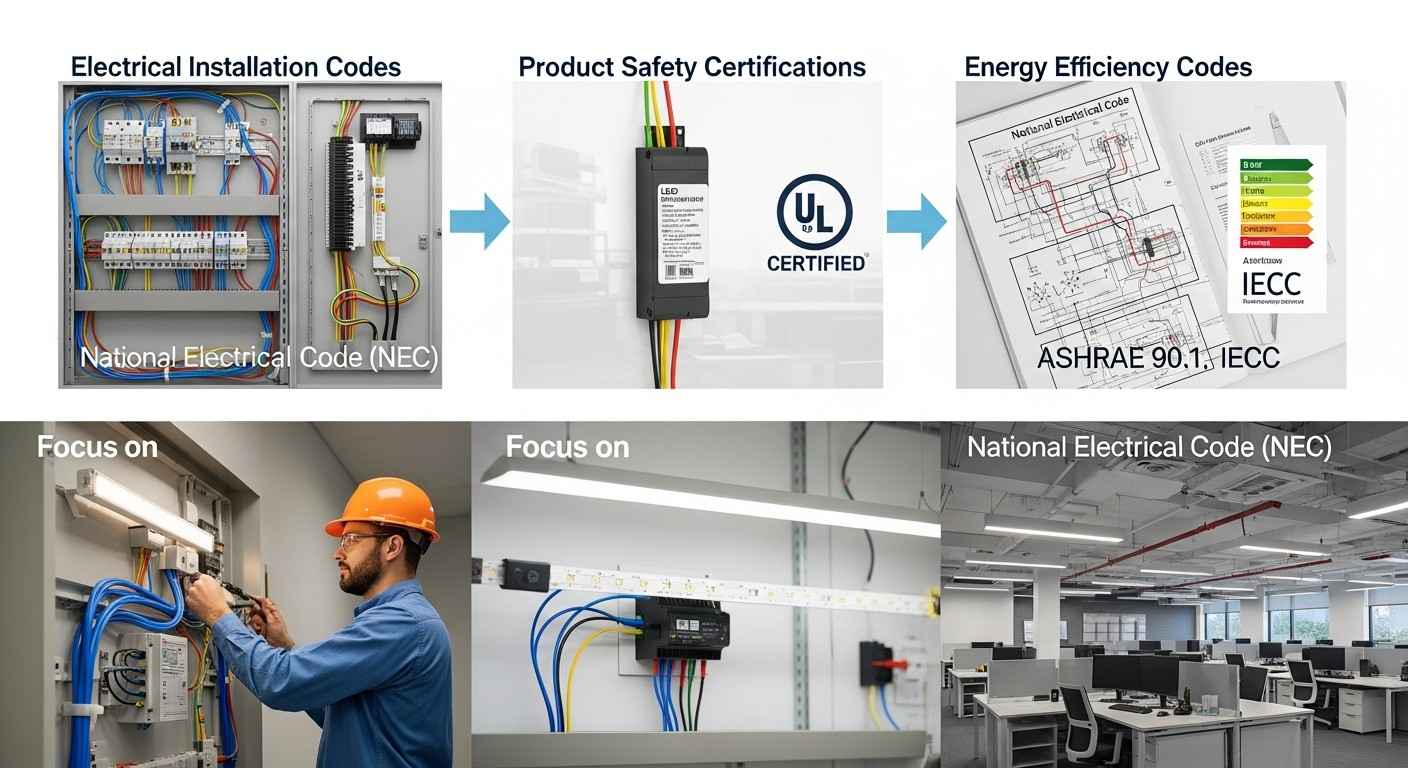
The Three Types of Codes That Govern Commercial LED Lighting
Most commercial lighting projects must comply with more than one type of standard. These rules typically fall into three categories. Each category focuses on a different part of the lighting system.
| Category | Purpose | Example Standard |
|---|---|---|
| Electrical Installation Codes | Defines safe wiring and installation practices | National Electrical Code (NEC) |
| Product Safety Certifications | Verifies that lighting products meet safety standards | UL Certification |
| Energy Efficiency Codes | Limits building lighting energy consumption | ASHRAE 90.1, IECC |
Understanding how these categories work together is important when planning commercial lighting systems.
- Electrical codes focus on how systems are installed.
- Certification standards evaluate how products are designed and tested.
- Energy codes address how efficiently buildings use electricity.
All three influence how a commercial LED system is designed.
National Electrical Code (NEC): The Foundation of Electrical Safety
In the United States, the National Electrical Code (NEC) serves as the main standard which regulates all electrical installations. Most states and municipalities use the National Fire Protection Association (NFPA) developed National Electrical Code (NEC) as their electrical building code standard.
The NEC exists to accomplish one simple goal which protects people from electrical dangers. The system achieves this goal by establishing safe methods for people to install wiring and grounding systems and electrical equipment.
When it comes to lighting systems, the NEC addresses several important areas:
- Wiring methods and conductor types
- Grounding and bonding requirements
- Circuit load capacity
- Overcurrent protection
- Electrical equipment placement
These requirements help ensure that lighting systems operate safely over time.
For example, long LED strip installations must be wired carefully. If power is delivered improperly, voltage drop can occur. This can lead to uneven brightness or overheating in extreme cases.
Power supplies must also be sized correctly. Undersized drivers can cause flickering or unstable performance. Licensed electricians typically follow NEC guidelines when installing lighting systems. Doing so helps ensure that the system will pass inspection and operate safely.
UL Certification: Verifying the Safety of Lighting Products
While the NEC focuses on installation practices, UL certification focuses on the safety of the products themselves. Underwriters Laboratories (UL) is an independent organization that tests electrical equipment to confirm it meets established safety standards.
Before a lighting product receives UL certification, it goes through several evaluations. These tests examine how the product performs under real-world conditions.
Typical testing includes:
- Electrical insulation performance
- Temperature and heat resistance
- Fire safety characteristics
- Component reliability during extended use
- Protection against electrical failure
Products that pass these evaluations receive UL certification.
This certification signals that the product has been independently tested for safety. It also helps building inspectors verify that installed equipment meets recognized standards. In many commercial construction projects, using certified components is not optional. It is required. UL-certified lighting products reduce risk and help simplify the approval process during inspections.
We design UL-certified LED strips, DMX control systems, drivers, and accessories engineered specifically for professional lighting installations. These systems are designed and tested to meet strict safety expectations.
Energy Efficiency Standards That Affect Commercial Lighting
Safety is only one part of the equation. Modern building regulations also focus heavily on energy efficiency. Commercial buildings consume large amounts of electricity. Lighting represents a meaningful portion of that demand, so governments have developed standards to reduce unnecessary energy use.
Two of the most widely referenced standards are ASHRAE 90.1 and the International Energy Conservation Code (IECC).
ASHRAE 90.1
ASHRAE 90.1 is a widely used energy efficiency standard for commercial buildings. It establishes limits for lighting power density. In simple terms, it defines how much lighting energy can be used per square foot of floor area.
The standard also encourages the use of advanced lighting technologies and automated controls.
International Energy Conservation Code (IECC)
The IECC is another major building energy code used throughout the United States. Many states and municipalities adopt IECC guidelines as part of their building regulations.
These rules often require lighting systems to include features that reduce energy consumption. Examples include automatic shutoff controls or daylight-responsive lighting adjustments.
LED technology makes it easier for buildings to meet these efficiency requirements. LEDs produce high levels of light while using significantly less electricity than traditional lighting sources.
| Energy Code | Organization | Focus |
|---|---|---|
| ASHRAE 90.1 | American Society of Heating, Refrigerating and Air-Conditioning Engineers | Commercial building energy efficiency |
| IECC | International Code Council | Energy conservation standards |
| Title 24 | California Energy Commission | State-level energy efficiency regulations |
How Lighting Control Systems Support Energy Compliance
Buildings today must follow modern energy codes which require them to reduce their lighting usage whenever their lighting system does not need to operate at maximum brightness. The system for lighting control works to attain this goal without needing human intervention.
The commonest strategies are:
- Occupancy Sensors – Turn lights off when a room is empty.
- Daylight Harvesting – Adjust lighting levels based on available natural light.
- Scheduled Controls – Reduce or turn off lighting during non-business hours.
The systems provide buildings with energy efficient solutions which maintain proper visibility and comfort.
DMX512 functions as a control system for sophisticated lighting installations. The system can operate 512 lighting channels which enable designers to modify brightness and color and lighting effects throughout various fixtures in retail stores and architectural installations and entertainment venues.
Common Compliance Mistakes in Commercial LED Installations
Even with high-quality lighting products, installation mistakes can lead to compliance issues. Several problems appear frequently in commercial lighting projects.
Using Non-Certified Lighting Products
Lighting products that lack recognized safety certifications may fail inspection or introduce long-term reliability risks.
Improper Power Supply Sizing
Drivers or power supplies that are too small can cause flickering or unstable performance.
Voltage Drop in Long LED Runs
When long LED strips receive power from only one end, brightness can gradually decrease along the strip. Proper power distribution prevents this issue.
Ignoring Electrical Code Requirements
Failure to follow NEC guidelines can create safety hazards and prevent lighting systems from passing inspection.
Best Practices for Designing Code-Compliant LED Lighting Systems
The journey to successful commercial lighting systems starts with the process of creating their design. The following procedures will assist in verifying that installations satisfy necessary safety criteria and performance requirements.
Use Certified Lighting Components
By using UL-certified products customers can trust that their lighting equipment will comply with established safety requirements.
Plan Power Distribution Carefully
LED installations that extend across long distances require multiple power injection points to achieve uniform brightness along the entire length of the installation.
Follow Manufacturer Documentation
The installation process requires electricians to use installation guides and wiring diagrams which show the correct connection methods for lighting components.
Work With Licensed Electrical Professionals
Electricians who possess the necessary licensing should conduct or evaluate commercial lighting projects because they know the requirements of electrical code regulations.
Why Documentation and Technical Support Matter
The parts of commercial lighting systems operate together because they include multiple connected components. LED strips and drivers and power supplies and control systems must function as a complete system.
Installation errors increase their probability when proper documentation does not exist.
The resources of wiring diagrams and installation guides and product specifications enable installers to learn about system configuration requirements.
Manufacturers that provide detailed technical support can also help troubleshoot issues during installation.
The SIRS-E system provides professional lighting project support through their complete documentation and wiring diagrams and their active technical support system. These resources help customers implement lighting systems correctly and safely.
Code Compliance Protects Every Commercial Lighting Project
Buildings require commercial LED lighting systems to comply with multiple standards before they can be installed.
The National Electrical Code establishes safety requirements while UL product testing standards and ASHRAE 90.1 and International Energy Conservation Code guidelines together determine the necessary design and installation requirements for lighting systems.
The rules become understandable to designers and contractors and installers which enables them to create lighting systems that provide improved safety and operational efficiency and reliable performance.
SIRS-E makes UL-certified LED strips, DMX control systems, drivers, and lighting accessories for commercial projects. The products are designed and supported in the United States and built to meet strict safety standards.
Frequently Asked Questions:
1. What code governs commercial lighting installations in the United States?
The National Electrical Code (NEC) establishes electrical safety standards for building installations, including lighting systems.
2. Why is UL certification important for LED lighting?
UL certification confirms that lighting products have been tested for electrical safety, fire resistance, and reliability.
3. What energy codes apply to commercial lighting systems?
Many commercial buildings must comply with ASHRAE 90.1 or the International Energy Conservation Code.
4. Do commercial LED installations require licensed electricians?
Commercial lighting systems typically follow NEC requirements and are installed or reviewed by licensed electrical professionals.
5. How do lighting controls improve energy efficiency?
Lighting controls reduce energy consumption by adjusting brightness levels, automatically turning lights off when spaces are empty, and responding to daylight conditions.