
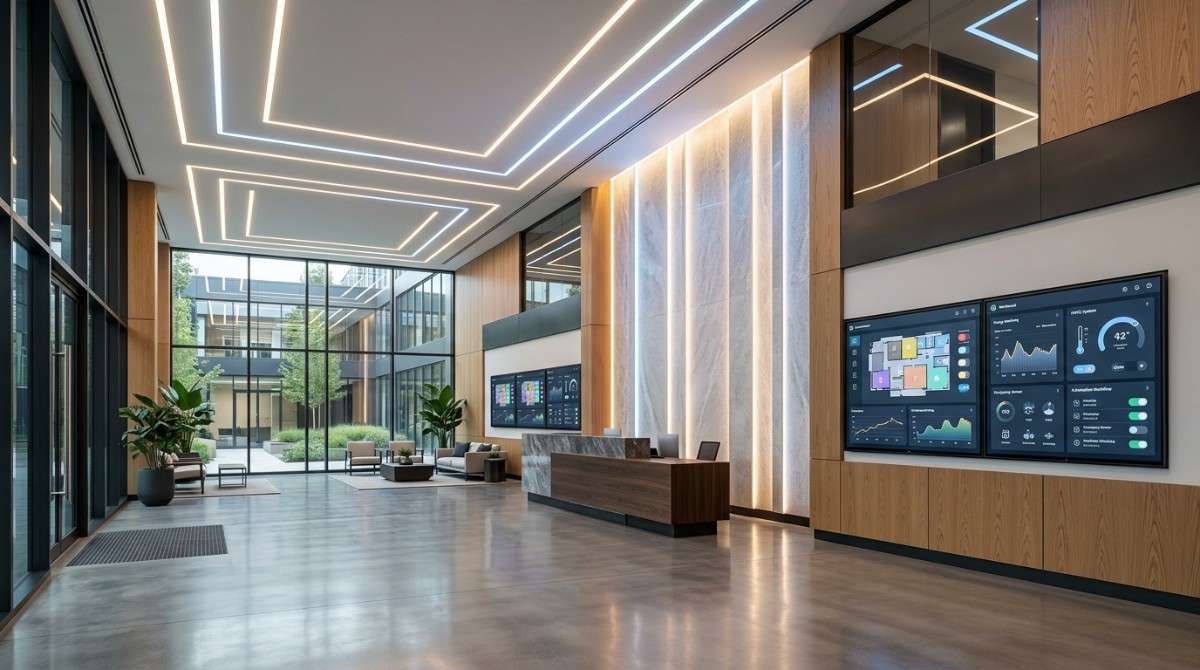
Can DMX Lighting Systems Integrate With Building Automation?
Lighting systems are no longer working in isolation.
In modern commercial buildings, hotels, retail environments, campuses, and public spaces, lighting is increasingly expected to operate alongside other building functions. Facility managers want centralized visibility. Building owners want better energy efficiency. Occupants expect environments that respond to changing conditions without anyone having to manually intervene.
That shift has created a growing overlap between lighting control systems and building automation systems, two technologies that were originally built for very different purposes.
DMX was developed as a dedicated lighting control protocol. Building automation systems were designed to manage broader operational functions, climate control, security, scheduling, and energy management. On the surface, they don't have much in common.
But the question project teams keep running into is whether these systems can work together, and if so, how.
The short answer is yes. DMX lighting systems can integrate with building automation platforms. Getting that integration right, though, takes deliberate planning, the right hardware, and a solid understanding of how both systems actually operate.
Understanding the Two Systems in Context
Before getting into integration, it's worth being clear on what each system was built to do.
Purpose of DMX Systems
DMX is built for lighting control, full stop. Its core strength is transmitting large amounts of lighting data quickly and reliably. It shows up in:
- Architectural lighting
- Hospitality environments
- Retail lighting
- Entertainment venues
- Dynamic facade lighting
- Color-changing LED installations
Where DMX excels is in managing dimming, color control, scene transitions, dynamic effects, and multi-zone lighting systems. Because it operates in real time, fixtures respond to incoming commands almost instantly.
Purpose of Building Automation Systems
Building automation systems focuses on the bigger operational picture. A BAS typically handles HVAC, security infrastructure, access control, energy monitoring, occupancy management, and scheduling across an entire facility.
The goal isn't visual experience, it's operational efficiency and long-term building performance. These platforms are built to coordinate systems at a facility-wide level, not to drive individual fixture behavior.
Why Integration Is Becoming More Important
Buildings are getting more connected, and lighting is no longer treated as a standalone utility.
Unified Building Experiences
Facility managers don't want to jump between five different software platforms to manage a building. A single operational view that covers lighting alongside everything else is the direction the industry is heading. Lighting integration supports that directly.
Energy Optimization
Lighting and HVAC systems influence each other more than most people realize. Occupancy sensors can drive both lighting adjustments and temperature changes simultaneously. Scheduled shutdowns can hit multiple building systems at once. When systems share information, the overall energy strategy becomes far more effective.
Real-Time Responsiveness
Smart buildings depend on immediate reactions to what's actually happening inside them, occupancy-based lighting adjustments, emergency response scenarios, security-triggered lighting events, and time-based operational schedules. Integration is what makes those automatic responses possible.
How DMX and Building Automation Systems Integrate
Because DMX and BAS platforms were designed with different priorities, they don't typically talk to each other directly. A translation layer of some kind is almost always required.
Gateway-Based Integration
One of the more common methods is through protocol gateways. The gateway is basically an interpreter. BAS sends a command to the gateway, which gets translated into DMX and given to the lights.
This makes a great deal of sense, as it leverages current investments in DMX infrastructure yet allows the building automation system to exist independently, while integration is able to be layered on top of existing systems without fully rewiring the lighting system from scratch. It is indeed the best way forward for many commercial projects.
Network Protocol Bridging
As lighting systems have moved toward Ethernet-based control, integration opportunities have expanded considerably. Modern DMX environments increasingly use Art-Net and sACN protocols that run over IP networks.
When lighting and building systems share network infrastructure, coordinating communication through intermediary software or hardware layers becomes much more manageable. This is particularly useful in larger facilities where centralized networking is already in place.
Direct Controller Integration
Some advanced lighting controllers support external automation inputs without needing a separate gateway at all. These controllers can receive commands directly from building management platforms and respond by triggering lighting scenes, adjusting zone brightness, activating event-based sequences, or responding to occupancy conditions. In these setups, the controller itself becomes the integration point.
Common Communication Layers Used in Integration
The right communication method depends on what the project actually needs to accomplish.
Dry Contact and Relay Inputs
This is the simplest integration method available, and it's still widely used because it's reliable. A BAS activates a relay output. The lighting controller reads that signal and executes a predefined action, the occupancy sensor activates a lighting zone, the security system triggers emergency lighting mode, and a scheduled event kicks off a scene change. Simple trigger-based systems don't get much credit, but they handle a lot of real-world integration work.
IP-Based Control Systems
Flexible integration of systems is made easier with Ethernet-enabled lighting systems. IP-based communication allows various building systems to implement information exchange over common networks, enabling centralized monitoring and remote management, flexible programming, or connectivity without having on-field access during the initial deployment phase. As smart building infrastructure continues to grow, IP-based integration is becoming the rule instead of the exception.
API-Based Communication
Most current automation frameworks have APIs that allow software systems to send commands and status information directly to each other. So you can do more with smarter behavioural scenarios, conditional scene activation, dynamic scheduling, occupancy-based optimization, and energy management workflows. This kind of API-based integration usually appears in commercial environments where multiple systems require continuous orchestration without manual input.
Technical Challenges in Integration
Integration offers real advantages, but it also introduces challenges worth understanding before the project starts.
Protocol Differences
DMX and BAS platforms weren't built with the same priorities. DMX is real-time, broadcast-oriented, and focused on immediate fixture response. Building automation systems are event-driven, logic-based, and focused on operational workflows that play out over longer timeframes. Bridging that gap requires a reliable translation mechanism, and choosing the wrong one shows up quickly in system behavior.
Latency Considerations
Lighting systems need to respond immediately. DMX updates run continuously. Building automation systems often operate on longer execution cycles. Poorly designed integration can introduce delays that affect the experience in noticeable ways, especially in environments where timing actually matters, like hospitality or entertainment.
Complexity at Scale
As projects grow, integration gets harder to manage. A large facility might have multiple lighting controllers, numerous automation zones, several network layers, and hundreds of fixtures all needing to coordinate. Without clear architecture from the start, troubleshooting any of it becomes a serious challenge.
Design Considerations for Successful Integration
The projects that handle integration will almost always address it early, not as an afterthought.
Plan During Design
Treating integration as something to figure out after installation is one of the most common and costly mistakes on these projects. When integration requirements get identified during the design phase, hardware compatibility can be evaluated properly, network architecture can be planned around real needs, control strategies can be defined clearly, and future expansion becomes far less disruptive.
Use Modular Architecture
Organizing lighting zones and automation zones logically from the start makes everything easier, upgrades, maintenance, troubleshooting, and expansion. Modularity also gives the system room to adapt as building requirements change over time.
Select Compatible Hardware
Integration lives or dies on hardware compatibility. DMX controllers with external input support, network-enabled lighting devices, BAS platforms that support third-party communication, and compatible gateways all need to be evaluated before anything gets installed. Compatibility problems are far cheaper to solve on paper than on-site.
The Role of Lighting Hardware
Hardware often determines how successful integration ends up being in practice.
Components that make integration work include DMX controllers with trigger inputs, network-capable lighting processors, scene-capable control systems, DMX gateways, and DMX-compatible LED drivers with external control functionality.
These are the connection points that let lighting and automation systems actually communicate, and specifying them correctly at the start of a project matters more than most people expect.
The Future of Lighting and Smart Buildings
The relationship between lighting and building automation keeps moving forward.
Unified Building Platforms
More facilities are pursuing centralized control systems that handle multiple building functions through a single interface. Lighting is becoming a standard part of those larger ecosystems rather than a separate system that operates alongside them.
IoT-Enabled Lighting
Connected lighting devices contribute data that goes well beyond simple on/off control, occupancy patterns, energy usage, system health, and operational performance. That data feeds building intelligence in ways that weren't possible with traditional lighting infrastructure.
Intelligent Automation
Automation is becoming more adaptive. Systems that adjust lighting based on occupancy patterns, environmental conditions, energy pricing, and user behavior are moving from cutting-edge to expected. Lighting isn't just responding to building intelligence anymore; it's contributing to it.
Lighting as Part of the Building Ecosystem
DMX lighting systems can integrate successfully with building automation platforms, but that integration rarely happens on its own. The most effective solutions depend on appropriate gateways, compatible controllers, structured network design, and planning that starts at the earliest stages of a project.
SIRS-E treats lighting control as a component of an integrated system encompassing power, communication, and operational infrastructure.
It's not only about controlling lights as a goal. It's creating harmonized workplaces where lighting is an active participant in the operation, evolution, and continued performance of a facility.
Frequently Asked Question's
Does DMX connect directly with building automation systems?
In general, the answer is not really. DMX generally requires gateways, controllers, or other communication by layers converting between lighting and automation protocols.
How can DMX be integrated into a BAS most simply?
Thus, relay triggers and protocol gateways are still somewhere between the simplest and most common ways to implement data exchange for most commercial projects.
Is DMX right for smart buildings?
Yes. DMX is still very much active for fixture control and is often incorporated into larger smart-building ecosystems.
What are the key limitations of DMX in automation environments?
This is because DMX was made primarily for lighting control and does not include native building automation features; an integration layer will almost always be needed.
Will DMX be replaced in smart buildings?
DMX isn't going anywhere. For the foreseeable future, it will coexist with network-based protocols and intelligent control platforms as part of hybrid lighting systems.









Leave A Comment
You must be logged in to post a comment.