
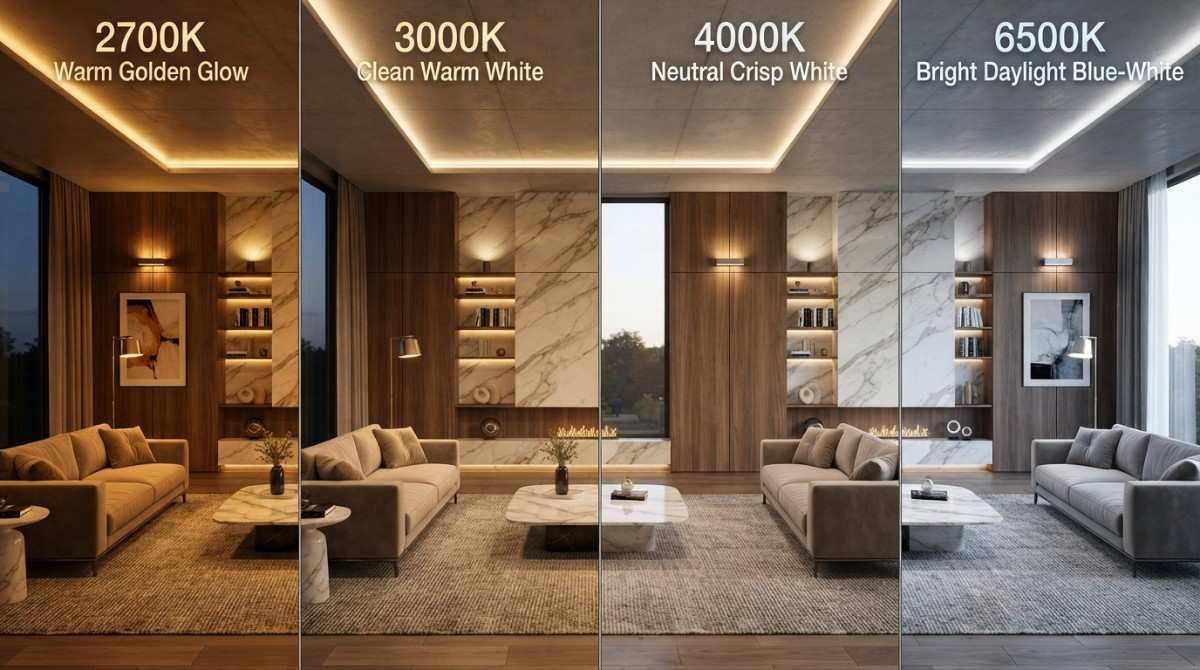
Choosing White LED Strips: 2700K vs 3000K vs 4000K vs 6500K
Picking a white LED strip isn't just about how bright you need it. The color temperature, that number everyone throws around, actually matters just as much, because it changes how a whole space feels. Whether you're lighting a hotel lobby, a retail display, an office, a museum, or someone's living room, getting the Kelvin right is half the job.
Four color temperatures come up again and again in specs: 2700K, 3000K, 4000K, and 6500K. Each one has its own personality, and each fits certain spaces better than others. Here's how to think through the differences.
What Does Color Temperature Mean in White LED Strip Lighting?
Color temperature is measured in Kelvin, and it tells you whether white light leans warm, neutral, or cool, not how bright it is. That's a common mix-up.
- Warm White (2700K–3000K): soft, cozy, easy on the eyes
- Neutral White (4000K): balanced, good for getting things done
- Cool White/Daylight (6500K): crisp and bright, built for visibility
Two strips can put out the same amount of light and still feel completely different depending on their Kelvin rating. If color accuracy matters for your project, look for something like SIRS-E's 95+ CRI strips; they hold consistent, accurate color across the board.
2700K LED Strips – Warm and Comfortable Lighting
Turn on a 2700K strip, and it feels a lot like flipping on an old bulb that has the same soft, golden warmth. It's the kind of light that makes people want to slow down and stay a while, which is exactly why hospitality spaces reach for it so often.
Wood finishes especially come alive under this light. So do decorative textures and architectural trim.
Everything just looks a bit richer and more inviting.
Where it works best:
- Hotels and hospitality spaces
- Restaurants
- Living rooms
- Lounges
- Cove lighting
- Boutique retail
Why go with 2700K?
If the goal is comfort and warmth above everything else, this is usually your answer. It's a natural fit anywhere ambiance is the main design driver: hospitality, dining rooms, homes.
3000K LED Strips – A Balanced Warm White
3000K is basically 2700K's slightly more polished sibling: a bit cleaner, a bit brighter, but still warm enough to feel comfortable. That's probably why it ends up being one of the most-used color temperatures in architectural work.
It gives you enough visibility to actually get things done during the day, without losing that cozy quality people associate with warm lighting.
Where it works best:
- Office reception areas
- Hotels
- Restaurants
- Retail stores
- Museums
- Kitchens
- Accent lighting
Why go with 3000K?
When a space needs to feel welcoming and function well, 3000K tends to check both boxes. That's why it shows up so often in mixed-use commercial interiors.
4000K LED Strips – Neutral White for Functional Spaces
4000K doesn't try to be warm, and it doesn't go all the way cool either; it just sits right in the middle. Crisp, neutral, and genuinely useful in spaces where people need to see clearly without feeling like they're under harsh light.
It's also good for showing interior finishes and architectural details as they actually are, which matters more than people realize.
Where it works best:
- Offices
- Schools
- Healthcare spaces
- Retail displays
- Commercial interiors
- Museums and galleries
- Workspaces
Why go with 4000K?
It's the balance point between clarity and comfort, which is exactly why it gets specified so often for spaces where color accuracy and good visibility both matter.
6500K LED Strips – Bright Daylight Illumination
6500K is as close as LED strips get to actual daylight: bright, sharp, high-contrast. This is what you reach for when function completely takes over from mood, like in spaces built around precision work.
The crisp white output makes fine detail easier to catch, which matters a lot in environments where mistakes are costly.
Where it works best:
- Industrial facilities
- Workshops
- Laboratories
- Utility areas
- Warehouses
- Inspection stations
- Task lighting
Why go with 6500K?
Anywhere visibility is non-negotiable, 6500K delivers. It's the obvious pick for industrial or technical settings where inspection and detail work come first.
Comparing White LED Strip Color Temperatures
|
Color Temperature |
Appearance |
Best For |
|
2700K |
Warm, soft white |
Hotels, restaurants, lounges, homes, decorative lighting |
|
3000K |
Warm white |
Hospitality, retail, museums, reception areas, kitchens |
|
4000K |
Neutral white |
Offices, healthcare, education, commercial interiors, galleries |
|
6500K |
Daylight white |
Warehouses, labs, workshops, industrial spaces, task lighting |
Factors to Consider When Choosing a White LED Strip
Kelvin number works for every job; it really comes down to a handful of project-specific things.
- Purpose of the space: A hotel lobby and a warehouse floor need completely different things from their lighting, so start here.
- Desired atmosphere: Warm light pulls people in and makes them want to linger; cooler light is more about staying sharp and seeing clearly.
- Color rendering: If there's artwork, merchandise, or fine finishes around, a high CRI strip is the difference between colors looking flat and looking real.
- Architectural design: The lighting should feel like it belongs with the building's materials and finishes, not fight against them.
- Natural daylight: A room that gets a lot of daylight during the day will read artificial light differently than one that doesn't, so it's worth planning around.
- User comfort: People should be able to spend time in a space without their eyes working overtime.
- Commercial vs. residential: These two usually call for pretty different lighting approaches, so it's worth being clear on which one you're dealing with.
- Consistency across areas: If a project spans multiple rooms, keeping the color temperature the same throughout makes the whole thing feel like one space instead of a patchwork.
At the end of the day, whatever temperature you land on has to pull double duty, working functionally while still fitting the design intent of the project.
Why CRI Matters No Matter the Color Temperature
Color temperature tells you if light is warm or cool. CRI tells you something different: how accurately colors actually show up under that light. A strip rated 95+ CRI will make artwork, textiles, finishes, and merchandise look far more true-to-life.
This matters a lot in:
- Museums and galleries
- Retail
- Hospitality
- Commercial interiors
- Architectural projects
Here's the thing: two strips can both be 3000K, but if one has a much higher CRI, colors under it will simply look more accurate. Kelvin decides the tone of the light. CRI decides how honestly it renders what's underneath it.
SIRS-E's White LED Strips come in 95+ CRI, so color performance stays consistent across a whole project.
Why SIRS-E White LED Strips
Architectural lighting projects need more than good light; they need reliability over years of use. SIRS-E builds professional-grade white LED strips meant for exactly that kind of long-term commercial and architectural work.
What sets them apart:
- Built for architectural and commercial environments
- Available in 2700K, 3000K, 4000K, and more
- 95+ CRI for accurate, consistent color
- UL-tested photometric data with full technical documentation
- Compatible with SIRS-E drivers and system components
- Engineering support from selection through installation
That combination gives architects, designers, and contractors something they can actually rely on when specifying lighting for a project.
Conclusion
There's no single "best" color temperature; it depends entirely on what the space needs to do and how it should feel. A warm hospitality space might call for 2700K, a mixed-use interior might land on 3000K, commercial spaces often lean 4000K, and high-visibility work areas need 6500K. The right choice comes down to matching Kelvin to the goal.
Every project has its own requirements, and getting the color temperature right makes a real difference in the outcome. SIRS-E offers professional-grade White LED Strips in multiple color temperatures, all with 95+ CRI, built for architectural, commercial, hospitality, retail, museum, and industrial use.
Take a look at SIRS-E's White LED Strip Lights, or reach out to the team directly if you want help picking the right fit for your next project.
Frequently Asked Questions
What does color temperature mean in white LED strip lighting?
It's measured in Kelvin and describes whether white light looks warm or cool; lower numbers run warm, higher numbers run toward daylight.
What's the actual difference between 2700K, 3000K, 4000K, and 6500K?
2700K is warm and cozy, 3000K is a balanced warm white, 4000K is neutral and built for commercial use, and 6500K is bright daylight for spaces that need maximum visibility.
Which color temperature works best for hospitality and residential spaces?
Most of the time, people land on 2700K or 3000K. Both give you that warm, lived-in feeling guests and homeowners tend to want.
Why does CRI matter if I've already picked a color temperature?
Because color temperature and CRI are answering two different questions. Kelvin tells you if the light looks warm or cool; CRI tells you whether colors actually look right under it. That distinction matters a lot when you're dealing with artwork, finishes, or anything where true color counts.
How do I actually decide which color temperature to use?
Start with what the space is used for, then think about the mood you want, how it fits the architecture, how much natural light it already gets, and whether accurate color rendering is a priority. Put those together, and the right temperature usually becomes pretty obvious.











Leave A Comment
You must be logged in to post a comment.