
How Offices Use LED Lighting to Enhance Experience Beyond Productivity
- Tired eyes
- Slower focus
- That drained feeling by late afternoon
Lighting shapes more than productivity. Most people know this, even if they never say it out loud. Walk into an office with harsh overhead lighting and you feel it immediately. Your shoulders tense up. Your eyes start working harder than they should.
Now walk into a space where the lighting feels balanced. Nothing jumps out. Nothing strains your vision. The room feels easier to sit in. That difference matters.
Modern offices use LED lighting for reasons that go far beyond efficiency. Lighting affects comfort. It affects mood. It affects how long someone can stay focused before fatigue sets in. When lighting is done right, people don’t think about it at all. They just work better and feel less worn down by the end of the day.
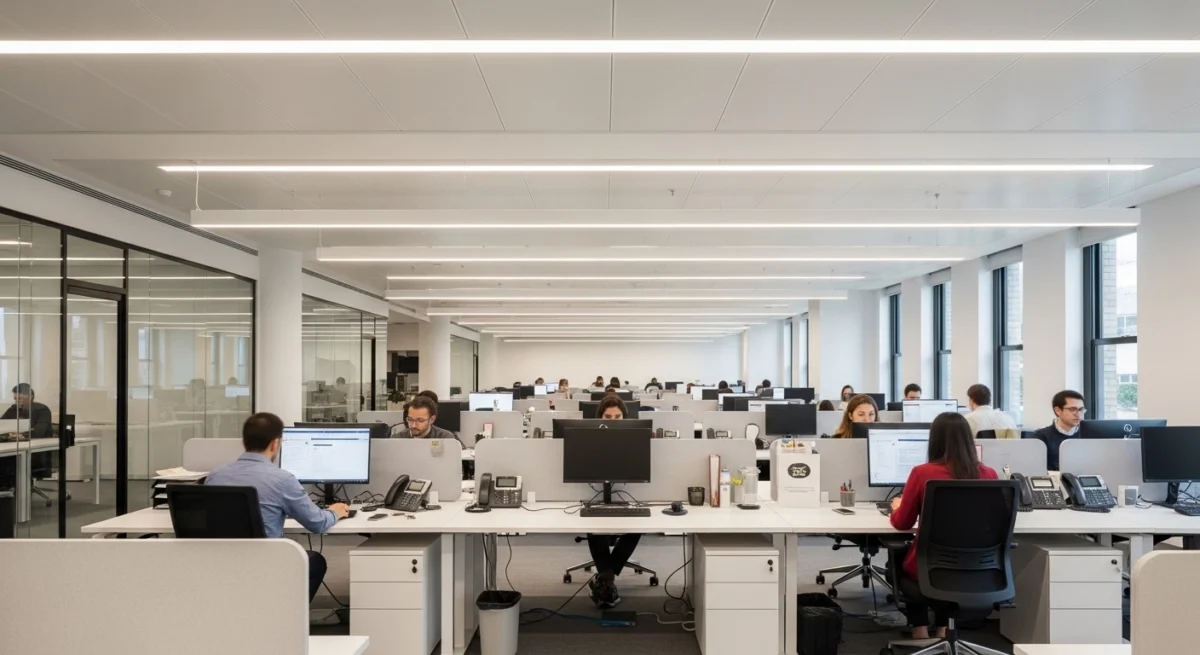
Why Lighting Matters Beyond Productivity
LED lighting has become a core part of the office experience, whether companies realize it or not. Visibility is only the baseline. What really matters is how lighting supports people over long workdays.
Poor lighting creates friction. Eyes work harder. Heads ache. Energy drops earlier than it should. Over time, that low-level discomfort becomes part of the work environment.
Good lighting does the opposite. It reduces fatigue. It supports well-being. It makes the office feel intentional instead of improvised. These details shape how employees feel about the space and how they interact with it every day. Culture isn’t just meetings and policies. It’s also the environment people sit in for hours at a time.
Understanding LED Lighting in Office Spaces
LED lighting changed office environments because it brought control into the equation. Older lighting systems were limited. They turned on. They turned off. That was about it.
LED systems allow offices to tune lighting to how spaces are actually used.
What makes LEDs different:
- Energy-efficient and long-lasting
- Stable illumination with minimal flicker
- Tunable color and brightness for various needs
That flexibility matters. Offices are not one-size-fits-all spaces. A conference room does not need the same lighting as a workstation. LEDs make it possible to adjust without redesigning everything from scratch.
Human Experience Factors Improved by LEDs
Visual Comfort & Eye Strain Reduction
Visual comfort is where people notice the difference first, as consistent illumination reduces the constant micro-adjustments eyes make throughout the day. However, when lighting becomes uneven or unstable, strain builds quickly.
In addition, minimal flicker plays a critical role. Although flicker may not be immediately noticeable, it often leads to headaches and tired eyes over time. Adjustable color temperature also improves comfort, as cooler light supports focused tasks while softer, neutral light works better for ambient use.
As a result, users experience less eye strain, fewer headaches, and reduced end-of-day fatigue.
Stress, Mood & Well-Being
Lighting directly influences mood, even when people do not consciously recognize it. For example, studies show that dynamic lighting can improve satisfaction and reduce stress. In real office environments, this often means avoiding lighting that feels harsh or overly static.
Moreover, LED systems support natural alertness by adjusting intensity and tone throughout the day. These changes do not need to be dramatic; instead, small adjustments often create the most noticeable impact.
Therefore, when lighting aligns with human needs rather than working against them, spaces feel calmer and more comfortable.
Spatial Experience & Aesthetics
Lighting shapes how people experience a space by guiding focus and influencing perception. For instance, it can make an office feel open or enclosed, as well as warm or clinical.
Furthermore, layered lighting helps balance these effects by highlighting architecture and guiding movement instead of overwhelming the space with uniform brightness. Thoughtful placement also strengthens brand identity, while clean and consistent lighting communicates attention to detail.
Consequently, well-designed lighting signals that a space is intentional and carefully planned.
Office Zones & LED Lighting Applications
Open Offices
Open offices require carefully balanced lighting, as overly bright conditions can make people feel exposed, while uneven lighting makes screens difficult to view.
However, glare-free LED lighting supports collaboration without overwhelming the senses. In addition, indirect lighting plays a key role by softening shadows and reducing reflections. As a result, the environment becomes more comfortable and easier to work in for extended periods.
Meeting & Conference Spaces
Meeting rooms serve multiple purposes throughout the day, shifting from presentations to discussions. Therefore, lighting must adapt to these changing needs.
Adjustable color temperature supports this flexibility, as cooler light improves focus during presentations, while neutral light creates a better environment for longer conversations. Moreover, LED systems enable these adjustments without requiring new fixtures or complex setups.
Break & Social Areas
Break areas should feel distinct from workspaces, and lighting helps create that separation. For example, warmer LED lighting encourages relaxation and casual interaction.
In contrast, it signals that the space is not intended for tasks or screen-focused work but for resetting. Consequently, when break areas differ from primary work zones, employees experience more effective mental breaks.
Private Workstations
Private workstations require a more personalized lighting approach, as individual preferences vary. While some people prefer brighter light, others work better in softer conditions. Therefore, a single setup cannot meet everyone’s needs.
LED desk lighting allows individuals to adjust brightness based on their tasks, whether reviewing documents or working on screens. As a result, this flexibility improves comfort and productivity.
Furthermore, when individuals control their own lighting, the overall office no longer needs excessive brightness. Consequently, the space remains balanced, and employees stay comfortable without struggling against poor lighting conditions.
Human-Centric & Dynamic LED Lighting Trends
Human-Centric Lighting (HCL)
People don’t feel the same at every hour of the day. Offices shouldn’t light them the same way either. Human-centric lighting follows that logic. Brighter light earlier in the day. Cooler tones when focus matters. Softer light later on, when eyes are tired and attention starts to drop.
Nothing fancy is required for this to work. You don’t need dramatic shifts or complex programming. Even small changes in intensity or color can make the space feel easier to work in. People stay alert longer. They feel less drained. And most won’t even realize why.
Smart Controls & Automation
Offices don’t run at full capacity all day. Lighting shouldn’t either. Occupancy sensors handle empty rooms. Daylight sensors respond when sunlight is already coming in. Lights adjust quietly, without manual switches or constant tweaking.
When these systems are done right, nobody talks about them. Rooms are lit when they’re used. They aren’t when they’re not. The lighting feels steady. Not jumpy. Not forgotten.
Daylight Harvesting
Daylight harvesting starts with a simple idea. Use the light that’s already there. As sunlight increases, electric lighting steps back. When clouds roll in or the sun shifts, the system fills the gap. The space stays visually even throughout the day.
According to the U.S. General Services Administration, federal buildings evaluated by the Lawrence Berkeley National Laboratory saw average annual energy savings of about 27% using daylight harvesting strategies.
Energy savings matter. But comfort matters more. Workstations near windows don’t feel harsh. Interior areas don’t feel dull. The office stays balanced, hour by hour.
Design Considerations for Exceptional Experience
Color Temperature & Visual Perception
Color temperature changes how people feel in a space.
- Cool: boosts alertness
- Neutral: balances mixed-use spaces
- Warm: encourages relaxation
Using the right temperature in the right place prevents visual tension and supports different activities throughout the day.
Lighting Uniformity & Glare Control
Uniform lighting reduces distractions. Glare does the opposite. Screens reflect light. Eyes strain. Focus drops.
Proper fixture placement and stable drivers help maintain consistent output. Reduced flicker means reduced fatigue. These details matter more than people realize.
Layered Lighting Approach
The layered lighting technique unites the three types of lighting, that is, ambient, task, and accent lighting. Ambient lighting is the general lighting that sets the ground level. Task lighting is the lighting that provides a suitable amount of light for the specific work.
Accent lighting serves to highlight the product and to create an atmosphere by adding depth and visual interest. This method generates a variety of options for lighting arrangements without depending on the use of high levels of brightness.
Safety & Compliance
Safety is a priority, and it should not be regarded differently. The usage of UL-certified LED strips and drivers comes in as a measure of supporting dependability and permanence of performance in the long run. Using stable drivers will also reduce flicker and consequently visual fatigue.
The installation of the equipment will always be done by licensed electricians, who are the ones recommended in any case. Correct installation will secure the well-being of people, property, and the lighting system itself.
Illuminate Comfort and Experience
Lighting affects how people work, whether they think about it or not. It shows up in how long they can stay focused. It shows up in how tired they feel at the end of the day. Those effects come from everyday lighting choices, not big design gestures.
At SIRS-E, we build LED lighting for real office environments. We design and manufacture our products in the USA. Safety matters to us. Consistency matters too. If you’re updating office lighting, we can help you choose solutions that work the way they’re supposed to, day after day.
Frequently Asked Questions:-
What is human-centric lighting in offices?
Lighting designed to follow natural daylight patterns and support comfort, mood, and engagement.
How does LED lighting reduce eye strain?
High-quality LEDs reduce flicker, provide stable output, and allow color temperature adjustment.
Can office lighting improve employee well-being?
Yes. Proper lighting reduces stress, supports alertness, and improves overall comfort.
Do LED systems save energy without compromising experience?
Yes. Modern LEDs and daylight-harvesting controls reduce energy use while maintaining visual quality.
Why choose UL-certified LED products for offices?
UL certification ensures safety, reliability, and consistent performance.