
LED Strip Quality, Performance & Lifecycle Explained
Understanding 2835 LED strips is essential when evaluating LED strip quality in professional systems. 2835 LED strips are widely used in commercial and OEM applications where thermal management, electrical stability, and long-term performance matter.
When understanding 2835 LED strips, it becomes clear that system design, power delivery, and heat control directly influence reliability and lifecycle.
LED strip lighting is often discussed as if it were interchangeable. In professional environments, that assumption fails quickly.
For OEMs, commercial buyers, and system integrators, LED strips are not decorative upgrades. They are electrical components expected to perform predictably, often for years, under continuous load. Once installed inside fixtures, cabinetry, architectural features, or equipment housings, access becomes limited and replacement becomes expensive.
This page explains how LED strip lights quality should be evaluated in professional systems, what actually drives performance over time, and how lifecycle expectations are shaped by engineering choices made early in the design process.
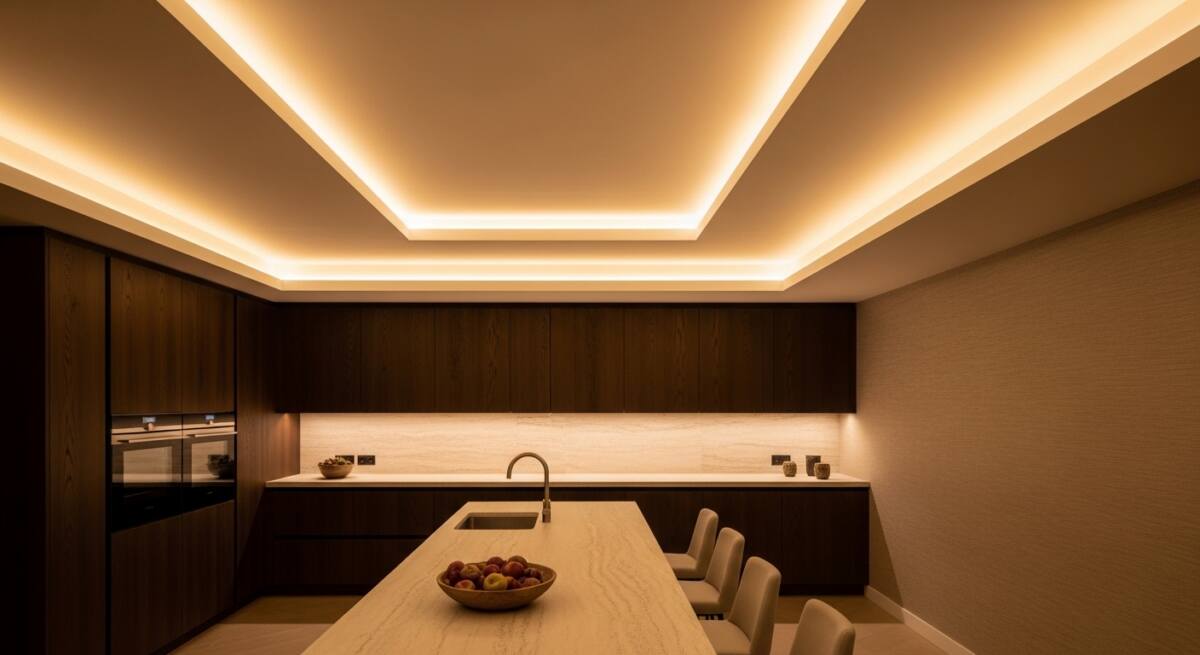
LED Strips Function as Electrical Components in Professional Systems
Continuous operation changes how LED strips age
In commercial and OEM installations, LED strips are not turned on occasionally; instead, they operate continuously for long durations. As a result, heat and electrical load increase over time, which directly affects LED strip quality and performance. They are left running for long stretches, sometimes all day. Under that kind of use, heat and current add up. Strips that look fine during testing often start losing output or stability once they are run this way for months.
Limited access makes small failures expensive
These strips are usually installed with the expectation that they will not be touched again. They sit behind finished surfaces or inside housings. When something goes wrong, the work is rarely limited to the strip itself. Accessing it can mean removing surrounding materials or interrupting operations.
Reliability is decided before installation
Once the strip is in place, there is very little you can change. The diode quality, the PCB, the way power is delivered, and how heat is handled have already set the outcome. If those choices were wrong, the problems show up later and are harder to fix.
Why LED Strip Quality Is Commonly Misjudged During Specification
Initial brightness is a poor indicator of long-term performance
Most LED strips look acceptable when first powered. That tells you very little about how they will behave after months of continuous use. Issues such as uneven output, color shift, or instability usually appear later, once the strip has been operating under real electrical and thermal load.
Spec sheets do not show how the system behaves in real conditions
LED count, wattage, and lumen output describe theoretical capability. They do not explain how a strip manages heat, handles voltage drop, or performs when run for long hours. Those limitations tend to surface only after installation.
The strip’s construction directly determines its performance
There is no single component that defines quality. Diodes, PCB construction, power delivery, and manufacturing consistency all contribute. If one area is compromised, the impact eventually appears in the system.
Diode Selection Drives Color Consistency and Output Stability
Binning shows up when you extend or replace a run
LED reels rarely behave the same once you start joining them together. On a single reel, things may look fine. Once runs get longer or a replacement reel is added later, differences become obvious. Color does not line up. Brightness shifts slightly from section to section. This is usually traced back to how tightly the diodes were grouped during production.
Output loss rarely happens evenly
LEDs do not fade at the same rate across a strip. With lower-grade diodes, some sections lose output faster than others. What started as a uniform run slowly breaks up visually. This tends to appear during normal use, not at the end of the rated lifespan.
Diode size only tells you the package, not the outcome
3528 and 5050 describe physical dimensions. They do not tell you how stable the diode will be over time. Larger packages can support higher output, but only if heat and current are managed correctly. Smaller packages hold up well when they are not pushed beyond what the rest of the strip can support.
LED Density and Brightness Increase Thermal Stress
More LEDs per meter means more heat to manage
Increasing density raises light output, but it also raises operating temperature. That heat has to go somewhere. If it is not moved away from the diode, it stays at the junction.
Heat shortens usable life
Higher temperatures speed up output loss and increase the chance of color shift. Over time, this leads to visible differences across the strip. Once that degradation starts, it does not correct itself.
Output should be set by what can be sustained
Professional LED strips are designed around stable operation, not maximum brightness. The goal is consistent output over time, not peak performance on day one.
PCB Design Determines LED Strip Quality and Performance and Heat Dissipation
Copper weight affects voltage stability
However, Thicker copper traces reduce electrical resistance and support consistent current flow. This helps maintain uniform brightness and reduces stress across the strip.
PCB structure supports thermal pathways
A robust PCB acts as a heat-spreading surface, pulling heat away from the diodes. Thin boards with minimal copper trap heat, accelerating degradation even when other components are adequate.
Low-cost PCB compromises appear later
Inferior PCB construction often passes initial testing but reveals weaknesses after extended operation, particularly in long runs or continuous-use environments.
Power Delivery Strategy Shapes Long-Term Performance
Voltage drop is a predictable electrical effect
Therefore, As current travels along an LED strip, resistance causes voltage to decline. Without mitigation, this results in dimming and uneven color toward the end of the run.
Power injection preserves consistency
Supplying power at multiple points helps maintain voltage levels and reduces electrical stress on both the strip and the power supply.
Power supplies must be sized for reality
Selecting a power supply based only on nominal wattage ignores duty cycle, thermal derating, and operating margin. Undersized supplies often manifest issues gradually, through flicker or instability, rather than immediate failure.
Flicker Is a System Design Issue, Not a Single Component Problem
Power stability influences flicker behavior
As a result, Many flicker issues originate from unstable or insufficient power delivery rather than the LED strip itself. Voltage ripple and load fluctuations are common contributors.
PWM implementation affects visual smoothness
Pulse-width modulation must be implemented correctly to avoid stepping, shimmer, or instability at low dimming levels. Poor PWM design becomes especially visible on camera.
Refresh rate matters in technical environments
Applications involving video capture, inspection, or broadcast require high-refresh systems operating in the kilohertz range. Flicker control depends on matching strips, drivers, and control hardware appropriately.
Control and Dimming Performance Depend on Signal Integrity
Stable dimming requires coordinated design
Over time, Smooth dimming is the result of compatible drivers, proper PWM frequency, and clean signal paths. Mismatched components often produce inconsistent results.
DMX systems require disciplined configuration
DMX512 enables complex control, but reliability depends on correct channel mapping, termination, and driver compatibility.
Wireless DMX must preserve full data integrity
Wireless solutions must transmit all channels without loss or interference. Partial transmission or signal instability undermines system control.
Operating Environment Directly Influences LED Strip Lifespan
Duty cycle increases cumulative stress
DMX LED strips running for extended hours experience greater thermal and electrical load than intermittent-use systems.
Environmental exposure accelerates wear
High ambient temperatures, vibration, or moisture exposure introduce additional stress that must be accounted for during product selection.
Environment-aware design improves predictability
Selecting LED systems based on actual operating conditions results in more predictable performance and reduced maintenance.
UL Certification Establishes a Safety Baseline
Certification validates electrical safety
UL-listed LED strips have been tested against established safety standards and are subject to ongoing compliance requirements.
Compliance reduces project risk
Certified components simplify inspection processes and reduce liability exposure for installers and end users.
Uncertified products introduce avoidable risk
Using uncertified LED strips in commercial environments increases safety, insurance, and compliance concerns.
LED Strip Lifespan Depends on System Design Choices
How Design Choices Affect LED Strip Lifecycle
| Design Factor | Properly Engineered Systems | Poorly Designed Systems |
|---|---|---|
| Thermal management | Controlled junction temperature | Heat buildup at diodes |
| Power delivery | Stable voltage across runs | Dimming and flicker |
| PCB construction | Adequate copper weight | Voltage drop, overheating |
| Component quality | Slow, predictable degradation | Early output loss |
| Certification | UL compliance maintained | Safety and liability risk |
Most Premature Failures Originate Outside the LED Strip
Electrical overload accelerates degradation
Excess current increases heat and stresses components beyond their intended limits.
Inadequate heat management shortens lifespan
Poor thermal pathways trap heat where it does the most damage.
Improper modification introduces failure points
Incorrect cutting, splicing, or installation practices compromise both performance and safety.
In commercial environments, understanding 2835 LED strips improves system reliability.
Professional LED Strips Are Engineered as Systems
| Area | Professional LED Strips | Commodity LED Strips |
|---|---|---|
| Diode sourcing | Controlled, consistent | Mixed batches |
| PCB design | Engineered for load | Minimal copper |
| Testing | Electrical and thermal | Limited or none |
| Documentation | Diagrams and guidance | Basic specs only |
| Support | Technical assistance | Post-sale unavailable |
How OEMs and Commercial Buyers Should Evaluate LED Strip Quality
Documentation reflects engineering discipline
Clear specifications and wiring guidance signal thoughtful design.
Certification confirms compliance rigor
UL listings provide confidence in safety and testing processes.
Support availability matters long after purchase
Access to knowledgeable technical support protects system performance over time.
Why SIRS-E LED Strips Are Built for Long-Term Performance
SIRS-E designs LED strips specifically for professional systems where reliability and safety are non-negotiable.
Products are designed and manufactured in the United States, supported by in-house engineering, UL-certified product lines, and detailed technical documentation. Diagrams, guides, and knowledgeable support are part of the solution.
Understanding 2835 LED strips helps identify long-term performance limitations.
Selecting the Right LED Strip for Your Application
Selecting the right LED strip begins with understanding how the system will actually operate. Key considerations include:
- Operating hours and duty cycle
Continuous-use systems require conservative thermal and electrical design. - Installation environment
Ambient temperature, vibration, and moisture exposure directly affect lifespan. - Run length and power delivery
Longer runs require power injection and proper voltage management. - Control requirements
Dimming behavior, PWM stability, and DMX compatibility must match system needs. - Compliance and inspection requirements
UL certification should align with project and regulatory expectations.
Engaging technical support early helps align product selection with real-world conditions, reducing rework and extending system life.
Ready to Specify With Confidence?
If you’re evaluating LED strips for an OEM product, commercial installation, or integrated system, SIRS-E’s engineering team can help review requirements, power strategy, and compatibility before installation begins.